

India House

United States dollar ($) - USD
  • United States dollar ($) - USD
  • Euro (€) - EUR
  • Pound sterling (£) - GBP
  • Australian dollar ($) - AUD
  • Indian rupee (₹) - INR
Handcrafted Heritage

Wooden Craftsmanship
of India

Indian wooden craftsmanship reflects centuries of skill and respect for natural materials. Long before becoming collectibles, Indian artisans built durable wooden drink-ware for daily use. At India House Stores, our handcrafted wooden beer mugs honor this tradition, prioritizing quality and traditional workmanship over mass production.

Traditional Craftsmanship

India’s Tradition of Wooden Handicrafts

Wood has been an essential material in Indian craftsmanship for generations. Artisans across different regions have worked with locally available wood to create utensils, tools, and household items.
Family-led Workshops
Generational Knowledge
Refined Manual Tools
Patience & Precision
This tradition values patience and precision, where the process is just as important as the finished product.
Artisans shaping wood into objects designed for use, durability, and balance
TIMBER
Material Selection

Types of Wood Used in
Traditional Mug Making

Choosing the right wood is an important part of creating a functional handmade wooden beer mug. Artisans carefully select hardwoods that are strong, stable, and suitable for regular use.

Types of Wood for Mug Making

Commonly used woods include:

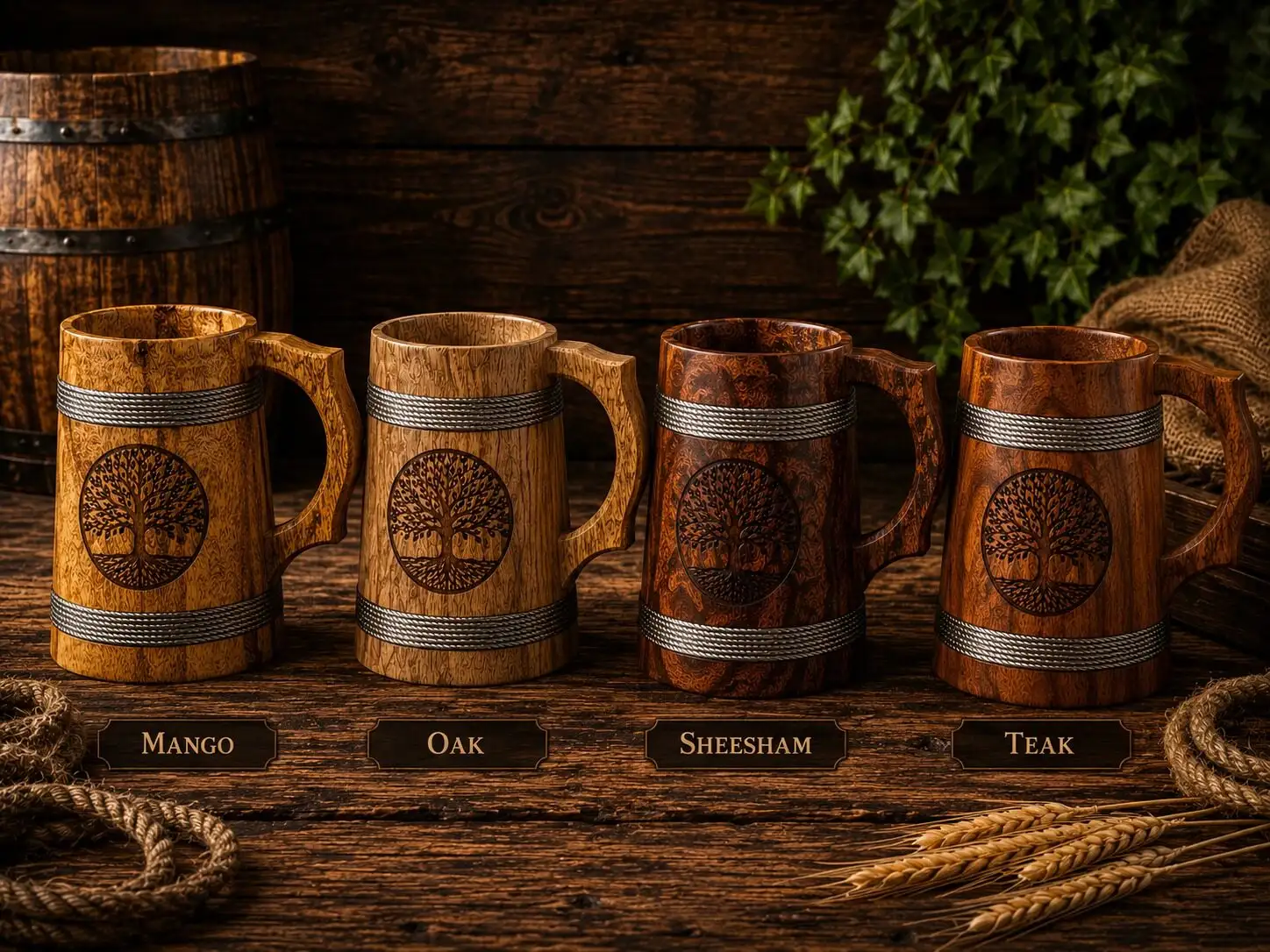
01 Mango wood, known for its durability and natural grain patterns
02 Sheesham (Indian rosewood), valued for its strength and rich colour
03 Other hardwoods selected based on availability and suitability
Each type of wood has its own texture, grain pattern, weight, and finish, making every handcrafted wooden mug unique.
PROCESS
Artisan Methods

The Process of Handcrafting Wooden Beer Mugs

Creating a handcrafted wooden beer mug involves several detailed steps, each completed with care rather than relying entirely on automated machinery.

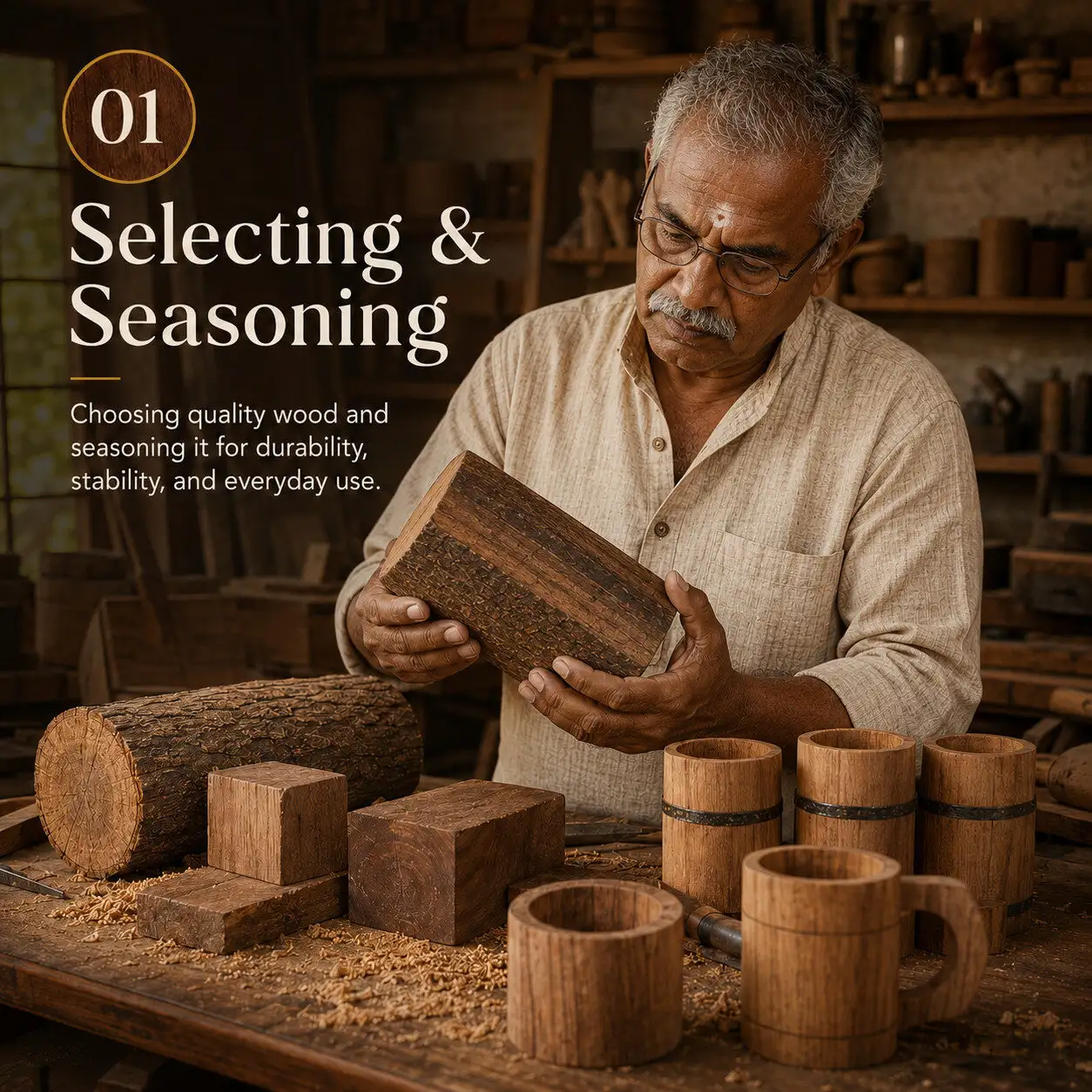
01

Selecting & Seasoning

Selecting and seasoning the wood to ensure durability and stability for daily use.

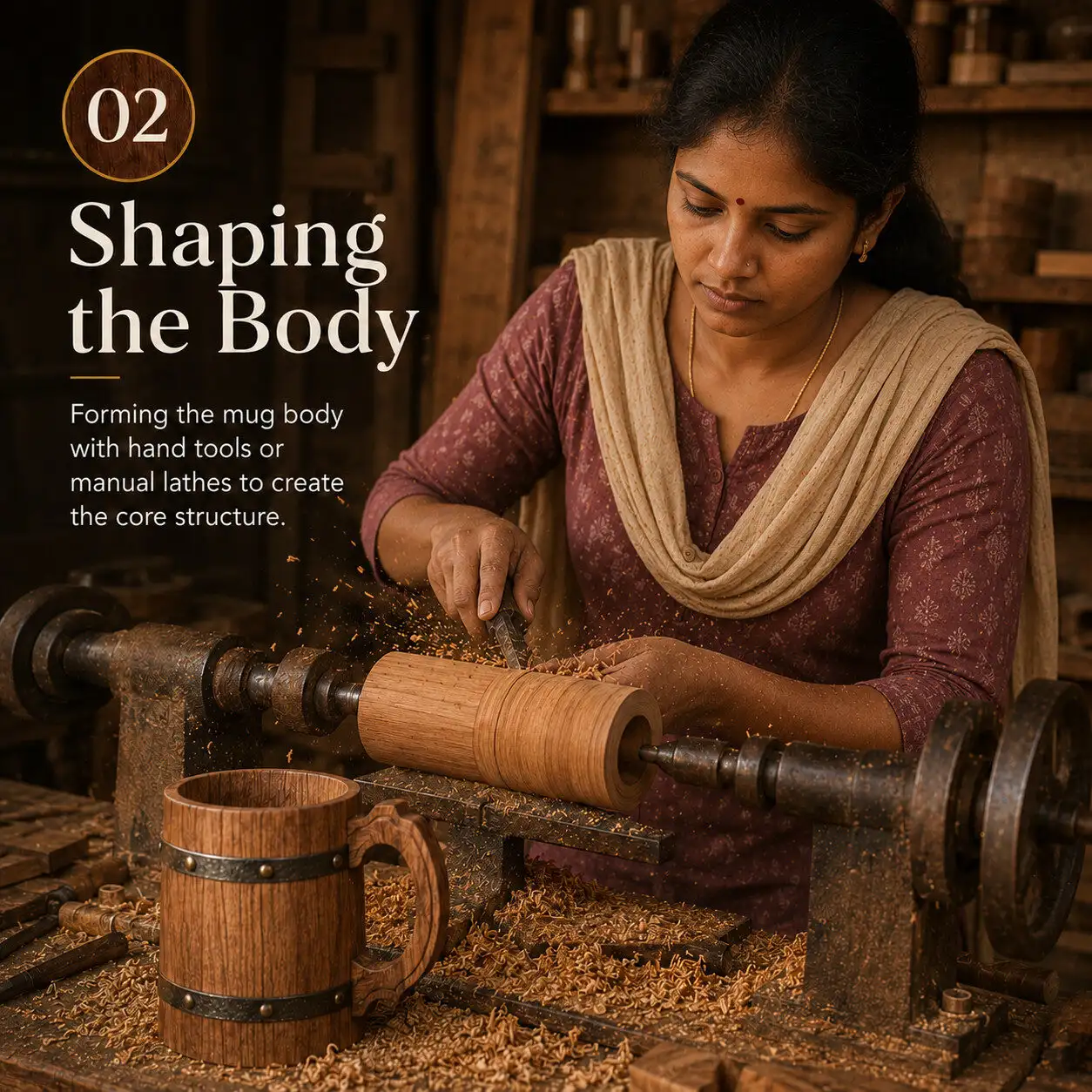
02

Shaping the Body

Shaping the mug body using hand tools or manual lathes to form the core structure.

03

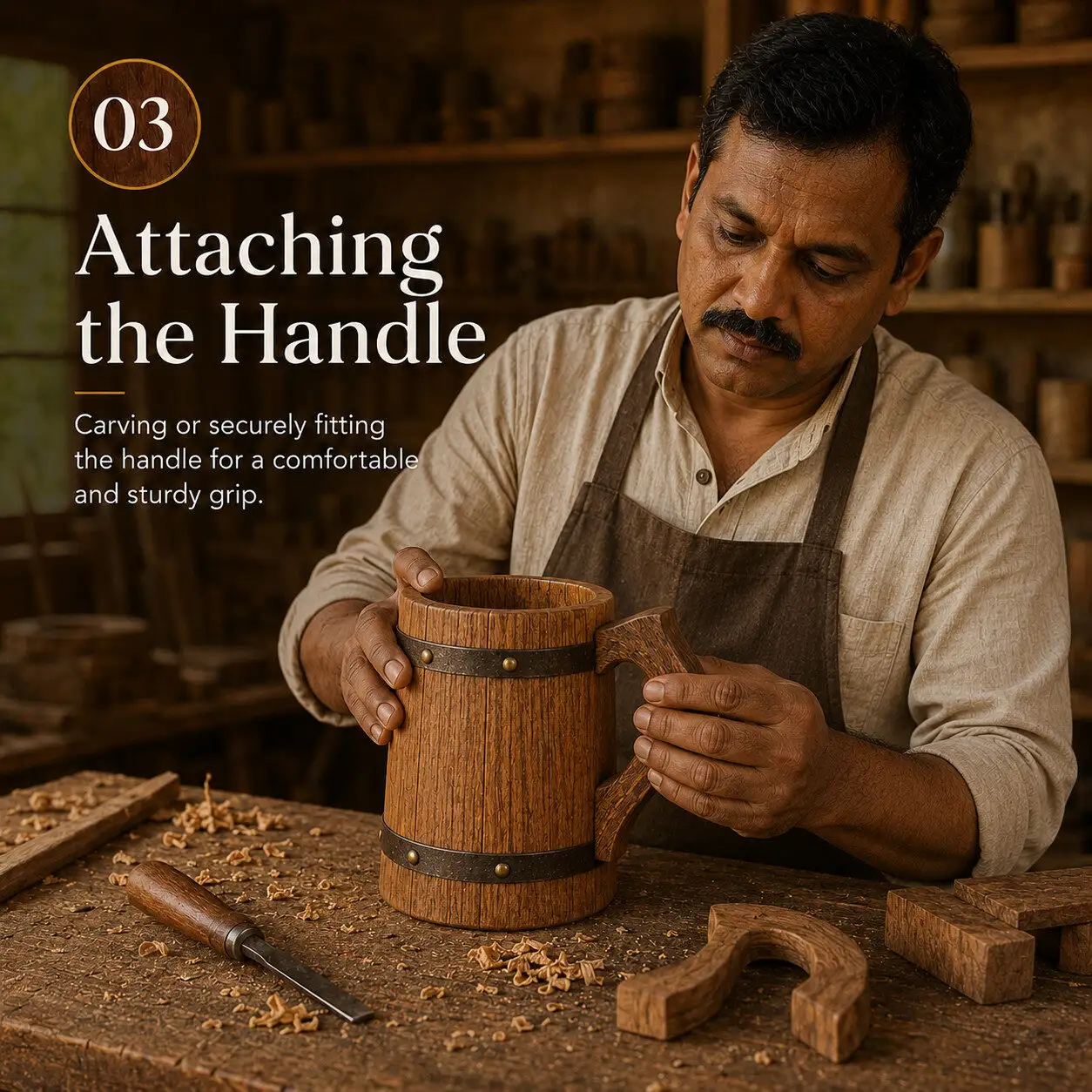
Attaching the Handle

Carving or securely fitting the handle to ensure a comfortable and sturdy grip.

04

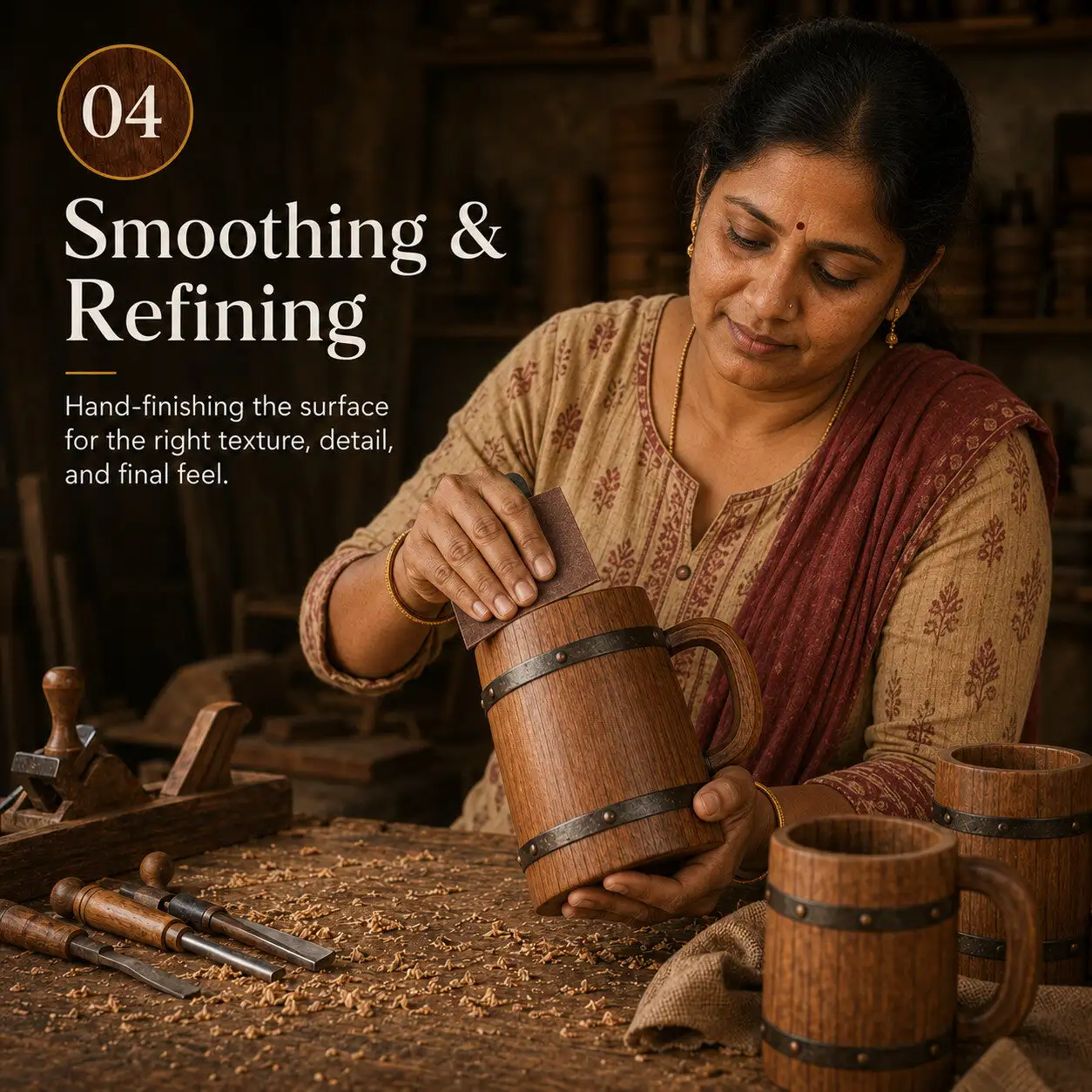
Smoothing & Refining

Smoothing and refining the surface by hand to achieve the perfect texture and finish.

05

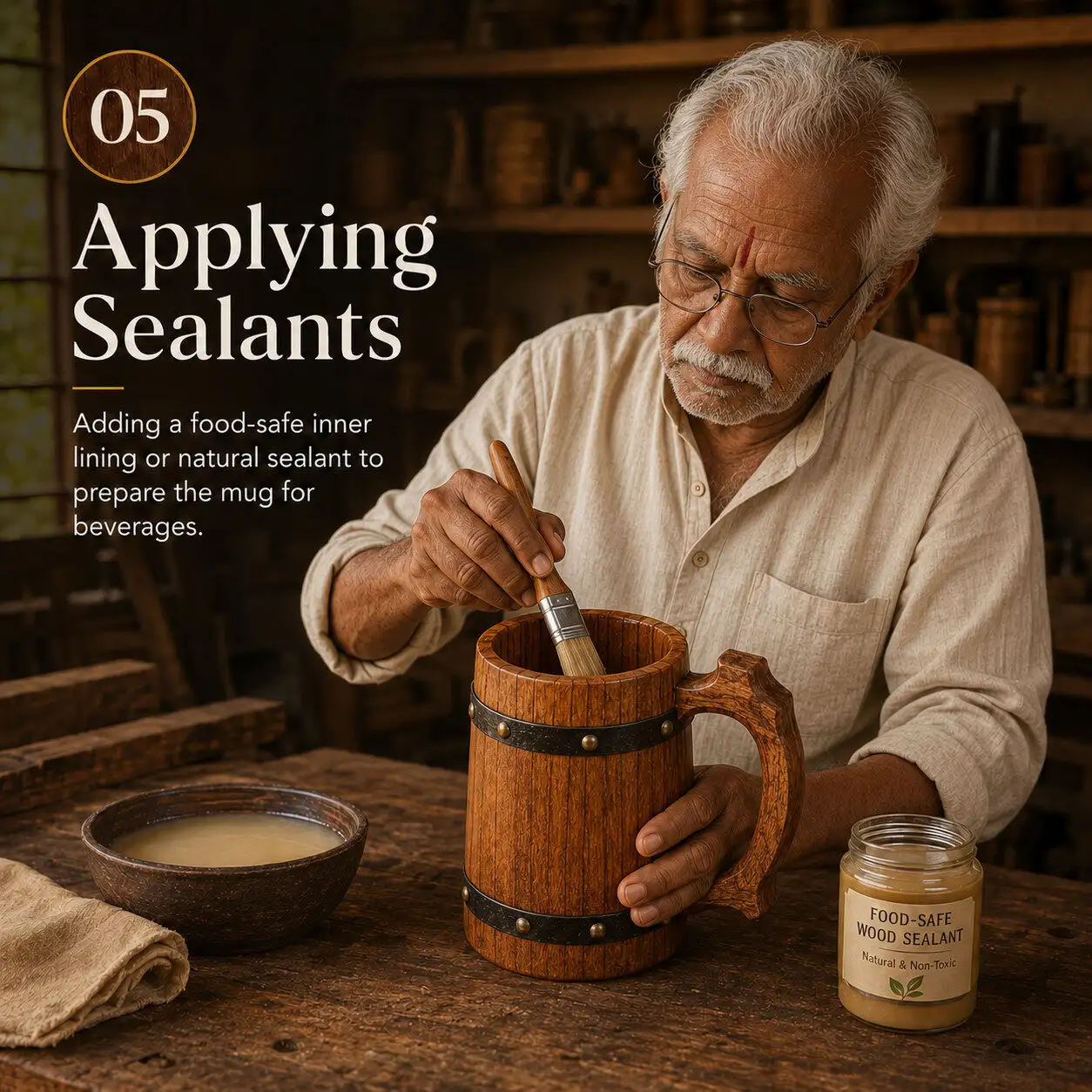
Applying Sealants

Applying food-safe inner linings or natural sealants to make the mug ready for beverages.

Authentic Hand-Carved Wooden Beer Mug
Authentic Craftsmanship

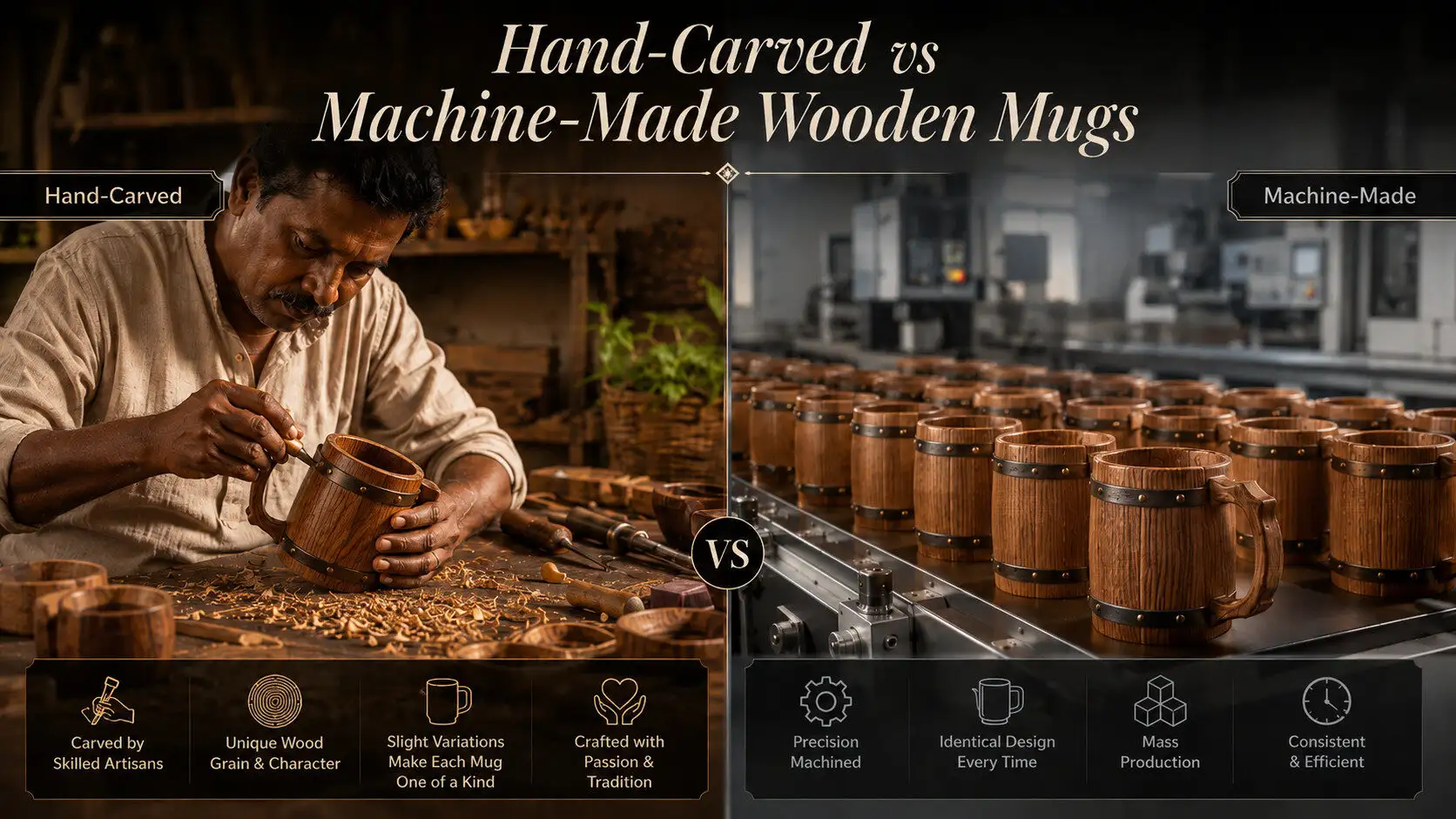
Hand-Carved vs
Machine-Made Wooden Mugs

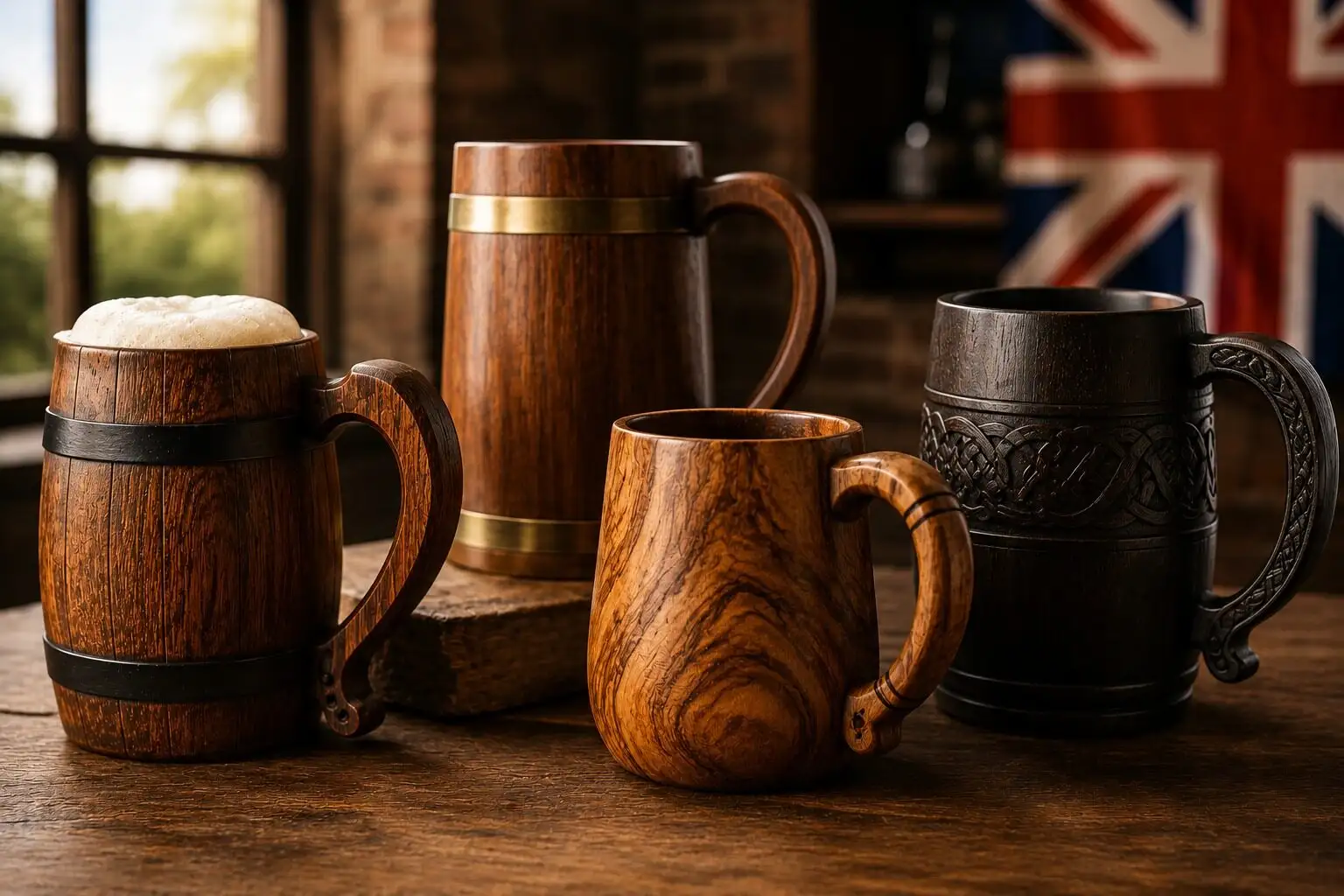
The difference between handmade and machine-made wooden mugs is noticeable in both appearance and structure.

1
Display natural variations in grain and texture
2
Often have stronger joints and thicker construction
3
Reflect the experience and skill of the artisan
4
Offer a rustic and authentic appearance

Machine-made mugs are typically produced in large quantities with perfectly uniform shapes. While efficient, they often lack the unique grain patterns, hand-finished details, and natural character that make handcrafted wooden beer mugs special.

Natural Protection

Food-Safe Finishes and
Natural Treatments

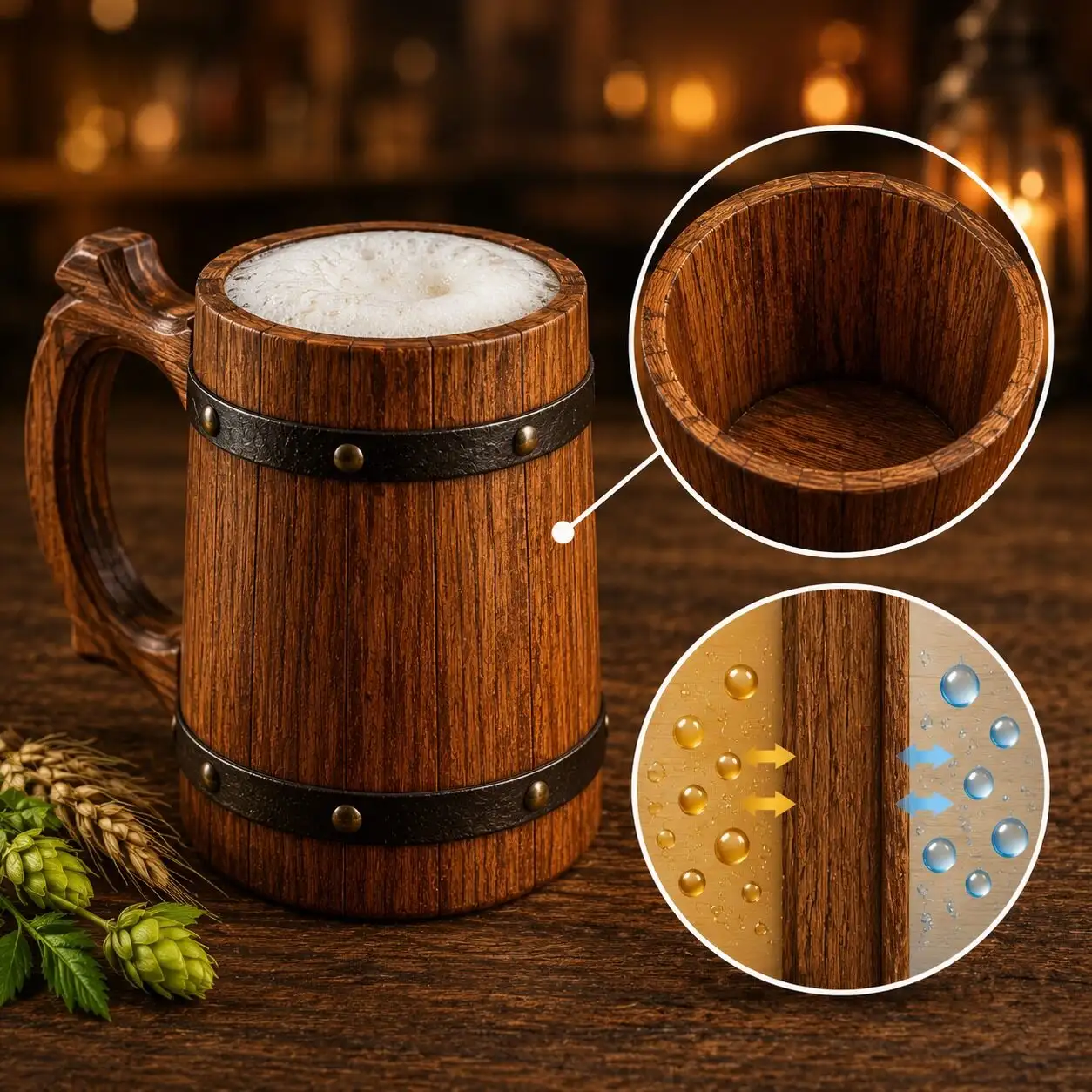
For a wooden beer mug to be suitable for beverages, the interior must be properly treated and sealed. Artisans often use:

Food-safe inner linings to help prevent leakage
Natural oils or sealants to protect the wood
Traditional finishing techniques instead of heavy synthetic coatings
Food-safe finishes on wooden mugs
Safety Naturally Sealed
NATURAL
Safety & Quality

Food-Safe Finishes and Natural Treatments

For a wooden beer mug to be suitable for use, the inside must be properly treated. Artisans employ specialized methods to ensure safety and longevity.

Food-safe inner linings

Applied with precision to prevent leakage while maintaining the integrity of your beverage.

Natural oils or sealants

Traditional treatments that protect the wood's fibers and highlight its unique natural grain.

Traditional finishing

Focusing on heritage methods rather than synthetic coatings for a truly authentic tactile experience.

Responsible Wood Sourcing

Sustainability & Responsible Wood

"Responsible wood sourcing has always been an important part of traditional woodworking practices. Many artisans work with locally sourced hardwoods and focus on minimising waste during production."

Eco-Conscious

Sustainable
Practices

This approach supports the long-term availability of natural resources while encouraging responsible craftsmanship.

01 / DURABILITY

Using durable hardwoods known for longevity ensures that every handcrafted piece survives for generations, reducing the need for replacement and waste.

02 / EFFICIENCY

Minimising waste during shaping and carving is a core skill. Artisans respect the raw timber by ensuring every cut is purposeful and scrap material is repurposed.

03 / CRAFTSMANSHIP

Supporting small-scale craftsmanship instead of mass production prevents over-exploitation and helps maintain the ecological balance of local forests.
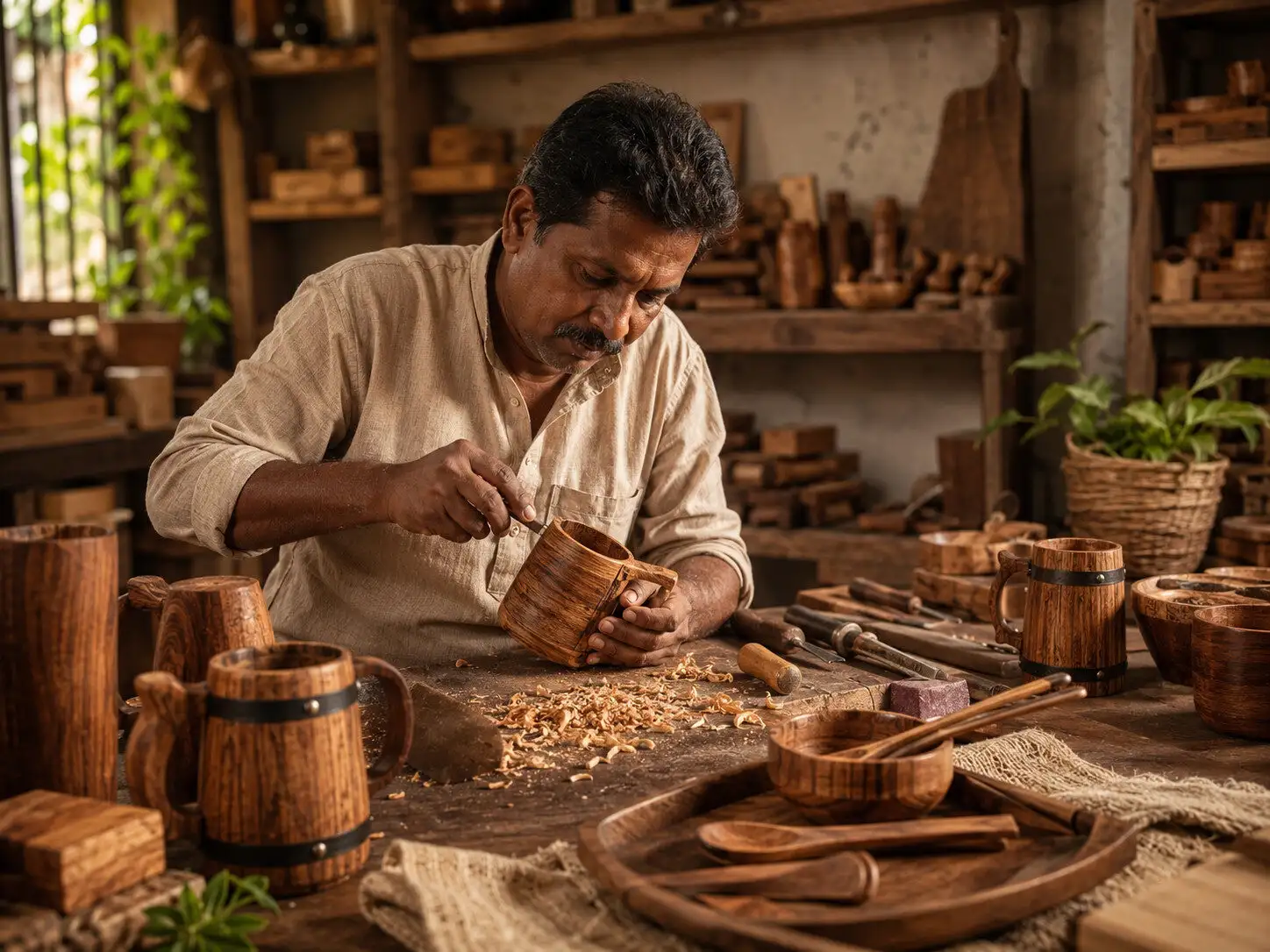
Skilled Indian wood artisan at work
Livelihoods Supporting Fair Demand & Skill
Artisanal Impact

Supporting Skilled Wood Artisans in India

Wooden craftsmanship provides livelihoods for skilled artisans whose work depends on fair demand and recognition of their skill. Supporting artisan-made products helps:

01

Maintain

Traditional woodworking skills that have been passed down through generations.

02

Provide

Stable income to craft communities, ensuring the economic health of artisan families.

03

Keep

Manual techniques relevant in modern markets, preserving the human touch in every piece.

For many artisans, woodworking is not just a trade but a lifelong practice shaped by experience.

INDIA HOUSE
Curation & Lifestyle

Why Handmade Wooden Mugs
Belong in Modern Homes

Handmade wooden beer mugs fit naturally into modern homes because they combine function with character. In a world of mass-produced items, they bring:

Practical Use For home bars and social gatherings.
Natural Choice An alternative to glass or metal.
Visual Warmth Rich texture and organic appeal.
Craft Connection A link to traditional artisanal skills.

They bring individuality and meaning to everyday use.

FAQ
Common Questions

Frequently Asked Questions About Handcrafted Wooden Beer Mugs

Why should I choose a handcrafted wooden beer mug over a regular glass?

Handcrafted wooden beer mugs bring a warm, rustic charm that glass or metal just can't match! Since they are made by hand, every mug is unique, featuring beautiful natural wood grains and a special connection to centuries of Indian craftsmanship.

What kind of wood is used to make these wooden beer mugs?

Indian artisans use strong, durable hardwoods like Mango wood, known for its lovely natural grain, and Sheesham wood (Indian Rosewood), valued for its rich color and strength. These woods ensure your mug lasts and gives it a unique look!

Is it safe to drink beer from a wooden mug?

Yes, absolutely! The inside is specially treated with food-safe linings to stop leaks, plus natural oils and sealants to protect the wood. Artisans avoid harsh synthetic chemicals, so your drink stays perfectly safe and tastes great.

How are these handmade wooden mugs put together?

Artisans carefully pick and season the wood, shape the body with hand tools, securely attach the handle, and smooth it by hand before adding a food-safe lining. Since machines don't do all the work, every mug has its own special handmade character!

How can I tell the difference between a handmade wooden mug and a factory-made one?

Handmade wooden mugs have natural variations in the wood grain and texture, meaning no two look exactly alike. They feel thicker, sturdier, and have an authentic rustic look that perfectly identical factory-made mugs just can't match.

Does buying a handcrafted wooden mug actually help Indian artisans?

It really does! Buying a handcrafted mug directly supports skilled Indian woodworkers and their families. It helps them earn a fair income, keeps traditional crafting skills alive, and promotes small, eco-friendly workshops over mass-production factories.