
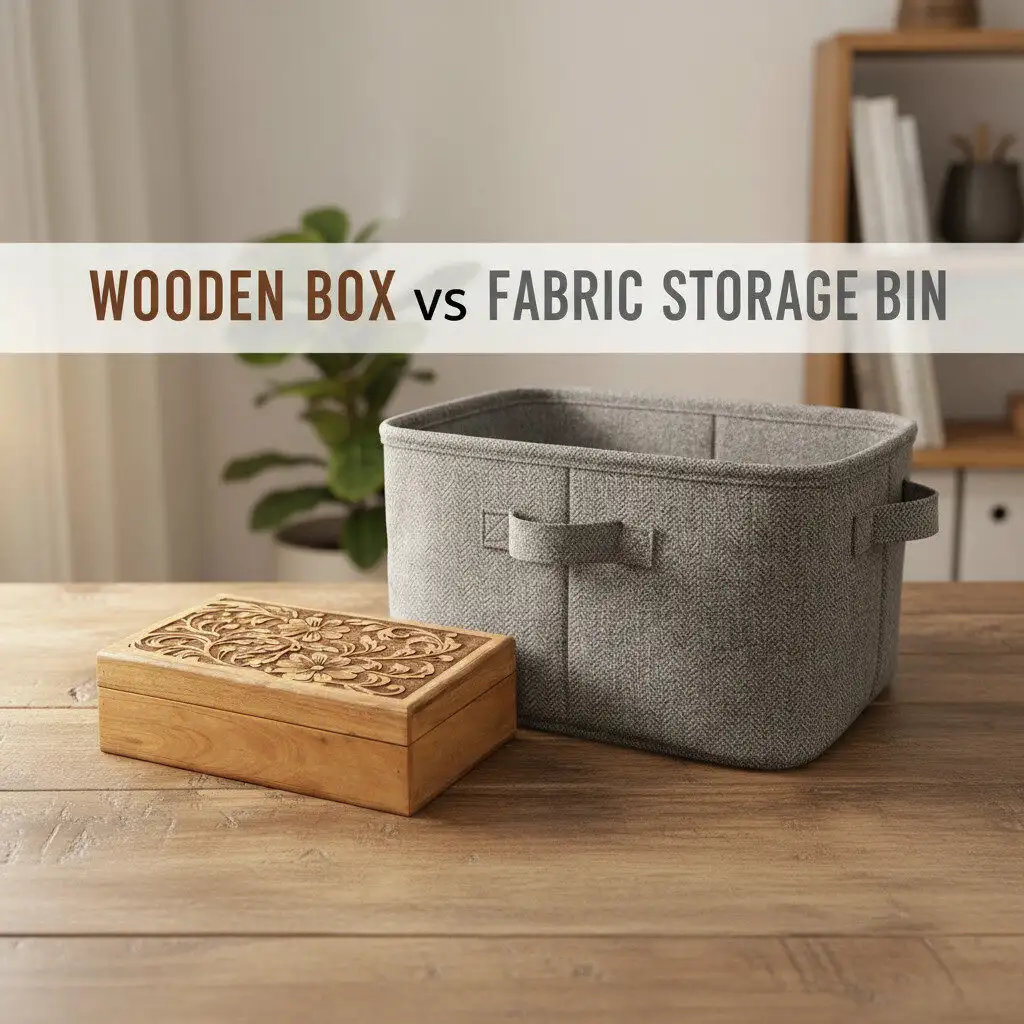
Choosing storage is not just about organizing things. In many homes, it becomes a long-term decision affected by dust, humidity, heat, and daily use. Many buyers start with a simple question: Wooden Box vs Fabric Storage Bin — which one is better?
But after months of use, the real question changes to: Which one lasts, stays clean, and does not need replacement again?
This page is built from real usage patterns observed across hundreds of households buying storage from India House Store over the years. It focuses on what actually happens after purchase — not just how products look on day one.
Quick Comparison – Wooden Box vs Fabric Storage Bin
| Feature | Wooden Box | Fabric Storage Bin |
|---|---|---|
| Lifespan | 10–25+ years (based on wood type) | 6–18 months (typical usage) |
| Shape Retention | Holds structure permanently | Starts sagging in 8–16 weeks |
| Hygiene | Wipe-clean surface | Dust absorption + odor risk |
| Load Strength | Handles heavy + mixed items | Suitable only for light storage |
| Climate Resistance | Performs better in heat & dust | Affected by humidity & moisture |
| Long-Term Cost | One-time investment | Repeated replacement |
In this wooden box vs fabric storage bin comparison, the difference becomes clear after a few months of real use, not during purchase.
Real Usage Evidence from Households
Based on internal observations and repeated customer feedback patterns:
Why This Happens (Material-Level Explanation)
To understand wooden box durability vs fabric, you need to look at how materials behave:
Fabric Storage Behavior
Fabric bins are made from non-rigid materials (canvas, synthetic blends) and cardboard or thin base support. What happens over time:
This is why fabric bin losing shape is common, not accidental.
Wooden Storage Behavior
Wooden boxes (especially seasoned hardwood) maintain structural integrity, do not bend under normal load, and provide a closed surface (less dust penetration). This is why wooden storage box benefits are visible over long-term use.
The Case for Wooden Storage Boxes
A wooden box for home is not just a storage unit. It is a long-term solution built for real conditions.
What Makes Wooden Boxes Reliable
Instead of short-term convenience, wooden storage offers:
A wooden box with lid also protects items from dust, which is a constant issue in many homes.
Where Wooden Boxes Perform Best
This flexibility is why wooden box aesthetic appeal combines function with design.
The Case for Fabric Storage Bins
Fabric bins are useful, but only within limits. They make sense inside wardrobes for lightweight clothes or short-term organization. They are often chosen because of low cost and foldability.
Fabric Storage Bin Disadvantages (Real Problems)
1. Structure Failure: Within weeks of use, sides bend, the base weakens, and the shape becomes uneven. This is the most common complaint linked to fabric storage bin disadvantages.
2. Hygiene Issues: Is a Fabric Storage Bin Hygienic? Dust settles quickly into fabric, moisture leads to mild odor (especially in monsoon), and washing is required but not always practical. This makes fabric storage bin hygiene difficult to maintain daily.
3. Repeated Replacement Cost: Initial cost may be low, but the replacement cycle is every 6–18 months. Over 5 years, the cost becomes higher than wooden storage. This changes the perception of “cheap” storage.
Region-Based Reality (Specific Insight)
Storage performance varies across locations:
Fabric bins absorb moisture faster and odor issues are more frequent. Wooden boxes perform better when kept dry.
Dust accumulation is the main issue. Fabric bins trap dust internally, while wooden boxes are easier to clean.
In apartments with limited airflow, higher odor risk exists in fabric. In independent homes with more dust exposure, fabric gets dirty faster. This is why wooden box vs fabric bin decisions vary based on location.
What Most Buyers Realize After 1 Year
After long-term use, fabric bins are replaced at least once, shape deterioration becomes noticeable, and cleaning effort increases. Meanwhile, wooden boxes continue functioning without major change, the structure remains stable, and maintenance remains simple. This shift in perception is why many move toward eco friendly storage box options.
Storage Trends in 2025–2026
Recent buying behavior shows a preference for natural storage materials, increased demand for handcrafted wooden boxes, and a shift from disposable storage to long-term solutions. Urban homes are moving toward storage that looks clean, lasts longer, and requires less maintenance.
Quick Decision Guide – Wooden Box vs Fabric Storage Bin
For most users, fabric bin vs wooden box which is better becomes clear after usage, not purchase.
Wooden Box vs Fabric Storage Bin – Final Verdict
• Wooden boxes perform better in durability
• Wooden boxes are easier to maintain
• Wooden boxes provide long-term value
Fabric bins remain useful only for limited, short-term needs.
Frequently Asked Questions
Yes, if dust and moisture build up over time.
Yes, if exposed to continuous moisture. Good quality rustic wooden storage box designs reduce this risk.
Wooden boxes perform better in heat, dust, and long-term usage conditions.
Not ideal. Structural weakening and hygiene issues appear over time.
Wooden boxes made from natural materials are more sustainable than synthetic fabric bins.
Make a Smarter Storage Decision
The comparison Wooden Box vs Fabric Storage Bin is about how storage performs after years of use. If you are facing fabric bin losing shape or frequent replacement, switching to a wooden box is the practical choice.
"India House Store offers wooden box with lid, organizer box, and handicraft wooden boxes built for real homes, real usage, and long-term value."
Still Confused? Read This Before You Decide
Most buyers choose fabric bins first because they seem easy. But many switch later after facing repeated issues. If your goal is storage that lasts, less cleaning effort, and better structure over time, then choosing wood earlier saves both money and effort. Make a decision based on usage, not just appearance.