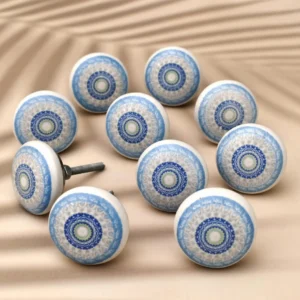

When you want to refresh cabinets without a full renovation, changing the knobs is one of the simplest places to start. But marble vs ceramic cabinet knobs is not just a question of appearance. You need to consider the furniture’s finish, the feel of the knob in your hand, the fitting hardware and the amount of care each material needs.
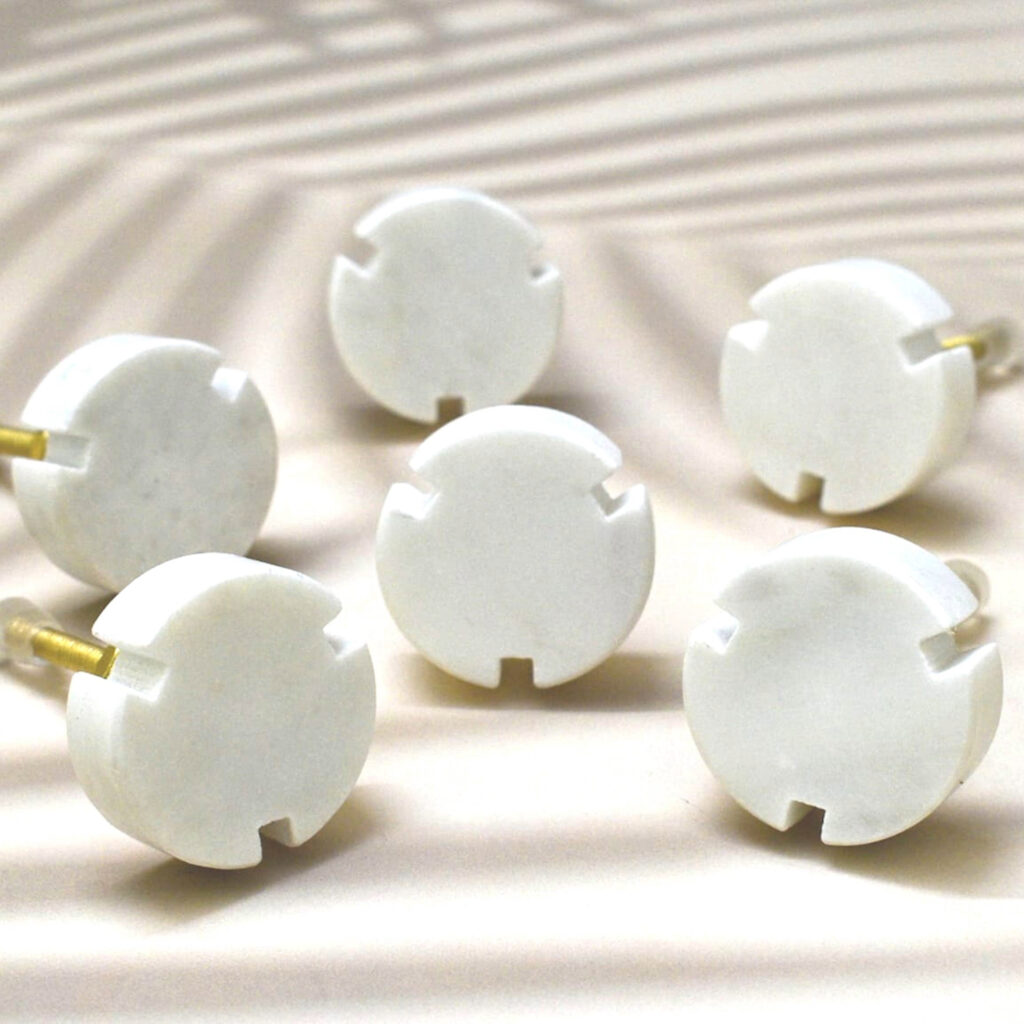
This practical guide explains where both styles work best and what to check before ordering a set.
Marble and ceramic knobs: what changes?
Marble knobs feature the look and character of natural stone. Their colour and veining can complement warm wood, painted cupboards and understated interiors. White marble offers a simple, bright appearance, while green or pink marble can create a more expressive accent.
Ceramic knobs can introduce colour, painted motifs and glossy surfaces. They suit decorative dressers, characterful wardrobes and kitchens where a small patterned detail fits the room’s style.
Neither is automatically the more durable or more attractive choice. Construction, installation and everyday treatment affect the experience as much as material.
Which style suits your furniture?
For clean and minimalist kitchens
Try white marble with light doors, natural timber or neutral cabinetry. It gives a calm look without making the fittings disappear. Use one design across a row of cabinet doors for visual consistency.
For vintage dressers and colourful rooms
A hand-painted ceramic design can give an older piece new personality. Choose one colour already found in the room so the knob looks intentional rather than random.
For a decorative wardrobe or bedside table
Both options work. Marble makes a quiet, stone-led statement; patterned ceramic can become a small focal point. Match the hardware’s mood to the furniture rather than following trends alone.
Four important checks before buying cabinet knobs
- Measure the diameter. The selected India House marble and ceramic examples list a head diameter of about 3.81 cm. Always verify the exact product measurements.
- Check screw length and door thickness. Replacement bolts are not universally interchangeable. Measure the existing fitting and confirm the listed installation hardware suits your cabinet.
- Count the knobs. Include every drawer and door before choosing a pack size. Mixing finishes midway through one bank of cabinets may look unplanned.
- Test grip and clearance. Consider whether you can comfortably grasp the knob and whether it interferes with neighbouring handles, drawers or doors.
How to care for marble and ceramic knobs
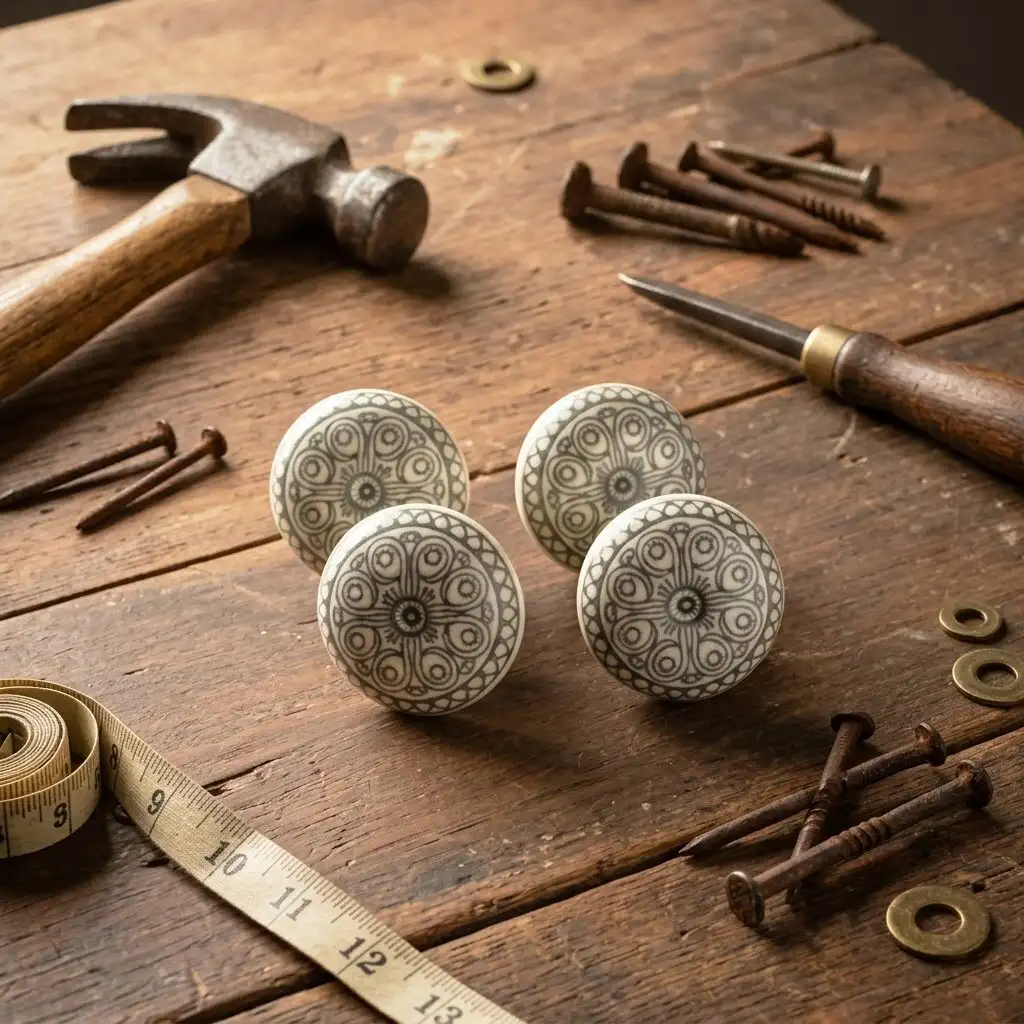
Wipe both materials gently with a soft damp cloth, then dry. Avoid abrasive scrubbers. For marble, avoid acidic cleaners because they can affect the stone surface. For glazed or painted ceramic, use gentle cleaning to help protect decorative finishes. Take care not to strike either knob against hard objects because chips are possible.
Compare genuine India House options
Prefer natural white stone? Explore the Round White Marble Knobs, Set of 6. For a bolder colour, see the Green Marble Knobs, Set of 6. If a painted design is a better fit, compare the Grey and White Ceramic Knobs, Set of 10.
You can also browse the marble knob collection to compare colours and finishes.
Marble vs ceramic cabinet knobs: a practical comparison
Choose by the way the cabinet is used, not only by the finish. Marble gives natural variations in the stone; ceramic can offer consistent colour themes and decorative patterns. Both may chip from impacts, and both need correctly fitted screws.
- Natural variation: expect differences in stone veining from one marble knob to another.
- Colour choice: ceramic is often the simpler route when you want coordinated patterned accents.
- Installation: inspect the door thickness, screw engagement and head clearance before fitting a whole set.
- Cleaning: avoid acidic products on marble and abrasive scouring on decorated ceramic.
Compare real pack sizes and fitting details
In the linked India House product listings, white marble knobs come as a set of six and grey-and-white ceramic knobs come as a set of ten. Both examples specify a knob-head diameter of about 3.81 cm and include installation hardware. Compare price per knob, then check screw fit and door thickness before choosing a pack.
For more practical ideas, see our guide to choosing ceramic knobs and furniture makeovers with drawer knobs.
Frequently asked questions
Can marble knobs chip?
Yes. Natural stone can chip after a hard impact, so handle it carefully.
Do ceramic knobs work on kitchen cupboards?
Yes, when their fitting and finish are suitable. Avoid abrasive cleaning.
How do I choose the correct screw?
Measure your door thickness and existing bolt thread and length, and check the product specification.
Are marble knobs better than ceramic?
Neither material is best for every room. Marble suits natural-stone styling, while ceramic gives you more options for patterns and colour. Good sizing and proper installation matter with both.
Can I replace cabinet knobs myself?
Often you can, provided the screw, hole and cabinet thickness are compatible. Follow product fitting guidance and avoid overtightening.
Should all knobs in a kitchen match?
A consistent finish usually helps a kitchen feel coordinated, but mixing designs across different furniture pieces can also work if there is a shared colour or style.
Final thought: Measure your existing hardware first, choose the look that suits the furniture and pick a set that you will find comfortable in everyday use.