Choosing storage in many homes is rarely a simple decision. It is not just about picking a box—it is about how that box behaves over time in heat, humidity, and daily use.
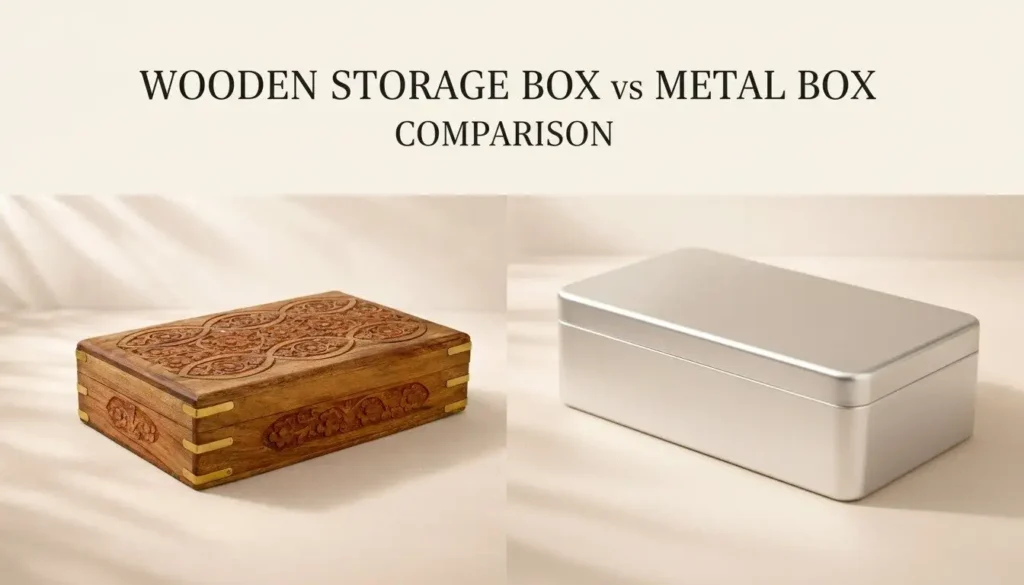
Many buyers ask: Wooden Storage Box vs Metal Box Comparison — which one actually works?
The answer is not based on assumptions. It depends on how each material reacts to temperature, moisture, and everyday handling inside homes.
Most households eventually shift toward wood after facing practical issues with metal.
What Actually Goes Wrong After You Buy
This is where most comparisons fail—they talk about features, not real problems.
In actual homes: A metal box kept under a bed during summer slowly heats up. By afternoon, the surface becomes warm, and the inside temperature rises enough to affect clothes and documents. During monsoon, the same box starts showing early rust near joints and edges. Within months, small patches spread.
Wood behaves differently. It does not stay cold or hot for long because it does not conduct heat like metal. Even in humid conditions, damage happens slowly and can be controlled.
This difference is not visible on day one—but becomes obvious within months.
The Real Difference: Material Behavior (Not Just Features)
Why Metal Heats Up Faster
Metal has high thermal conductivity. This means it transfers heat quickly.
This is why items inside metal boxes often feel warmer than room temperature.
Why Wood Stays More Stable
Wood has low thermal conductivity. It slows down heat transfer. So even if the room becomes hot, heat enters the box slowly and internal temperature remains more stable.
This makes wooden storage better for papers, and electronics.
Why Rust Happens in Metal Boxes
Rust is not random. It happens due to a chemical reaction: Moisture + oxygen + iron rust. Humidity accelerates this process. Walls release moisture during monsoon, floors trap dampness, and air humidity rises above 60–80%. This creates the perfect condition for rust. Once rust starts, it spreads under the paint layer and weakens the structure.
What Happens to Wood Over Time
Wood does not rust, but it reacts differently: It absorbs small amounts of moisture, may expand slightly, and can develop minor surface cracks over years. However, these changes are gradual and manageable with basic care.
Wooden vs Metal Storage: Practical Comparison
Instead of just listing features, here is how both behave in real use.
| Factor | Wooden Storage Box | Metal Storage Box |
|---|---|---|
| Heat Behavior | Stays stable | Heats up quickly |
| Moisture Impact | Slow effect | Fast rust formation |
| Weight | Moderate | Heavy (12–18 kg empty) |
| Movement | Easy for daily use | Difficult once filled |
| Lifespan | 10–25 years | 5–15 years |
| Maintenance | Low | Requires rust control |
| Appearance | Matches interiors | Industrial look |
Hidden Problems Most Buyers Realize Late
Wooden boxes, when placed slightly above the floor or in ventilated areas, avoid most of these problems and remain stable for years.
Where Each Storage Type Actually Works
Inside Bedrooms and Living Areas
Wooden boxes fit naturally into these spaces. They match furniture and can even be used as seating or side tables. Metal boxes in these areas feel out of place and are usually pushed into corners or hidden.
Under-Bed Storage
This is one of the most common use cases. A metal box under the bed traps heat due to low airflow. Over time, this creates a warm, closed environment. A wooden box performs better because it does not trap heat in the same way.
Utility and Garage Spaces
Metal boxes still have a place here. For tools or heavy items, strength matters more than appearance or heat control. However, even here, rust remains a long-term issue.
Long-Term Cost Reality
Actual cost includes maintenance and replacement. Metal boxes often require repainting, anti-rust treatment, and early replacement in humid areas. Wooden boxes usually require occasional polishing and basic moisture care. Over 5–10 years, wooden storage often turns out to be the more stable option.
What Buyers Are Choosing Today
Across urban and semi-urban homes, more people are shifting toward wooden storage boxes for daily use. Preference is increasing for handcrafted wooden boxes. Storage is now expected to match interiors, not just store items. Metal boxes are gradually becoming limited to non-living spaces.
Wooden Storage Box vs Metal Box: Final Decision
If your goal is practical, everyday storage inside your home: Wooden boxes provide better balance across durability, usability, and appearance.
If your need is heavy-duty, rough, or outdoor storage: Metal boxes still serve that purpose.
Before You Decide (Important)
Think about where the box will be used:
FAQs
Wooden storage boxes are better because they prevent heat buildup and reduce moisture impact.
This happens due to condensation. Temperature changes cause moisture to form inside closed metal boxes.
Yes. Good quality wooden boxes can handle daily use for many years when kept indoors.
They can be used, but rust often starts within months unless maintained properly.
Make the Right Choice for Your Home
The right storage should not create problems after a few months—it should make daily life easier. India House Store focuses on storage that works.
"Look for wooden options that match your room, usage, and space. Choose designs that combine function with everyday usability."