
In many homes, tea is used throughout the day—morning, afternoon, and evening. Over time, different tea bags and sachets start collecting in drawers, shelves, or near the stove. What begins as a few boxes can quickly turn into mixed packets, open sachets, and cluttered storage.
How to Organize Tea Bags at Home is not just about keeping things neat. It affects how quickly you can prepare tea, how long the tea retains its flavor, and how clean your kitchen feels every day. India House Store focuses on solving these real problems with storage solutions that match kitchen habits and space constraints.
What Actually Happens When Tea Bags Are Not Organized
In compact kitchens—common in cities like Bangalore or New York—tea bags are often stored near the stove for convenience. Over time, different types like regular tea, green tea, herbal blends, and flavored options get pushed into a single drawer or shelf, leading to mixed and cluttered storage. Using structured solutions from India House Store can help organize these varieties more effectively.
This leads to common issues:
According to tea storage experts and kitchen usage observations, tea contains volatile compounds that give it aroma. These compounds start breaking down when exposed to air, heat, and moisture. This process, known as oxidation, directly reduces flavor quality.
• Tea stored openly can lose around 15–25% of its aroma within a month
• Airtight storage can extend freshness up to 2 times longer
• High humidity environments (common in kitchens) can significantly speed up moisture absorption
This is why understanding How to Organize Tea Bags at Home requires both storage structure and preservation awareness.
A Practical System That Works in Homes
Instead of random storage, a structured approach works better. One effective method used in many organized kitchens is a simple three-level system.
This layered approach makes How to Organize Tea Bags at Home more efficient without adding complexity.
Choosing the Right Storage Based on Your Kitchen
Every home setup is different. The way tea should be stored depends on available space and daily usage habits.
In homes with modular kitchens, drawers are often underused. A tea bag drawer organizer can turn a cluttered drawer into a clean, structured storage area. Arranging tea bags vertically, similar to files, makes it easier to flip through options quickly.
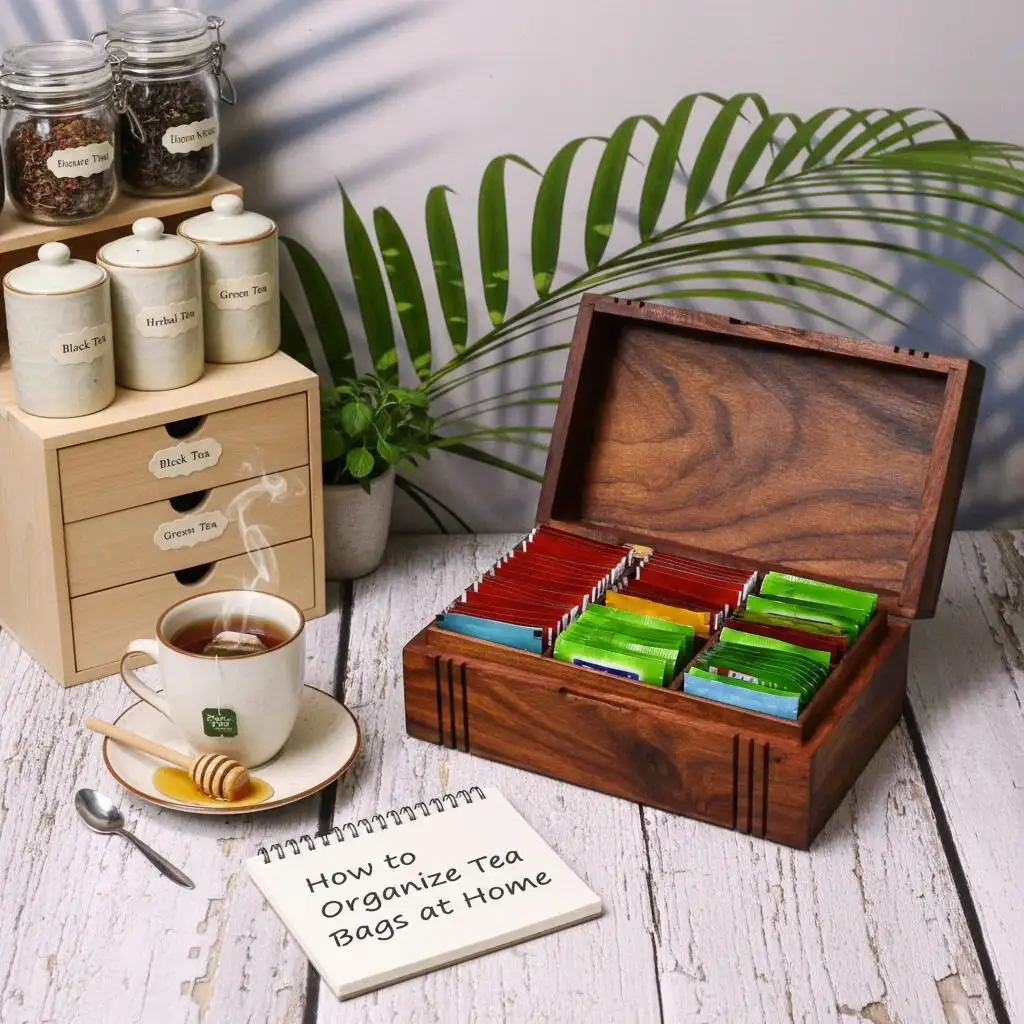
For households where tea is prepared frequently, keeping tea visible works better. A wooden tea box placed on the counter, divided into sections for different types of tea, reduces the need to open cabinets repeatedly. This setup is especially useful in homes where multiple people prepare tea throughout the day.
In larger kitchens or homes with pantry space, a tea chest with compartments can store a wider range of tea varieties, including those used occasionally or kept for guests.
For smaller kitchens, space-saving solutions such as stackable containers or slim storage boxes help reduce clutter without taking up extra room.
Material Matters More Than Most People Think
The type of storage you choose affects both durability and tea quality.
Wooden storage boxes are widely preferred in Indian homes because they are sturdy and block light exposure. A handcrafted tea box also fits well with traditional and modern kitchen designs.
Transparent acrylic containers make it easier to see what is inside, but they do not protect tea from light as effectively. Metal containers can offer strong sealing, but they are less common for organizing multiple tea types due to limited compartments.
Choosing the right material is part of tea organization tips that many people overlook, but it makes a noticeable difference over time.
Why Airtight Storage Is Important
Even with proper organization, tea can lose its quality if not stored correctly. Tea naturally absorbs moisture from the air. In humid environments—such as cities like Mumbai or Miami—this process happens faster, affecting both texture and taste.
A simple improvement is using a tea bag storage container with a lid. For better results, keeping tea in its original sealed pouch and placing it inside another container creates an extra layer of protection. This method reduces exposure to air and slows down oxidation. It is especially useful during monsoon months when kitchen humidity increases.
Organizing Tea in a Way That Matches Daily Use
A common mistake is organizing tea only by type. A better approach is to combine type with usage frequency. Tea used daily should always be within easy reach. Less frequently used varieties can be stored separately. Using a Wooden Tea Storage Box helps reduce unnecessary handling and keeps your main storage area neat.
For example, regular chai can be kept in a small tea bag holder near the stove, while herbal or speciality teas can be stored in a compartment box inside a cabinet. This approach makes tea bag organization for kitchen more practical for daily routines.
Common Mistakes That Reduce Tea Quality
Many households unknowingly reduce the quality of their tea through simple storage mistakes:
Avoiding these small mistakes can significantly improve how your tea tastes over time.
Visualizing a Well-Organized Tea Setup
A well-organized tea storage setup is easy to maintain and visually clean. Imagine a wooden tea box placed on the kitchen counter with six compartments. Each section holds a different type of tea—chai, green tea, herbal blends, and flavoured options. The box is positioned away from direct heat but within reach during preparation.
Inside a drawer, tea bags are arranged vertically, making it easy to pick one without disturbing others. Extra stock is stored in a sealed container placed on a higher shelf, away from moisture. This kind of setup reduces clutter, saves time, and keeps tea fresh for longer.
Modern Storage Trends in Kitchens (2025–2026)
Kitchen organization is changing in urban homes. More people are moving toward:
Tea storage is becoming part of overall kitchen design, not just a utility.
How India House Store Helps You Organize Better
India House Store offers storage solutions designed for usage patterns. Their range includes tea storage boxes with compartments, wooden organizers, and compact containers that work well in both small and large kitchens.
These products focus on durability, practical design, and ease of use. Whether you need a simple tea bag holder for daily use or a compartment box for multiple tea varieties, the goal is to make How to Organize Tea Bags at Home simple and effective.
Why Proper Tea Organization Makes a Difference
When tea is organized properly, daily routines become smoother. You spend less time searching for the right tea, your kitchen looks cleaner, and your tea retains its original flavor for longer. More importantly, it reduces waste. Tea that is stored correctly is less likely to lose its quality before it is used. To improve your setup, read How to Organize Tea Bags at Home.
Transform Your Tea Ritual Today
Don't let your premium tea lose its soul to humidity and clutter. Join 10,000+ tea lovers who have upgraded to India House Store storage.
"The perfect balance of heritage craftsmanship and modern moisture protection."