
In many homes across India and the United States, tea can lose its aroma faster than expected. The main reason is often not the quality of the tea, but how it is stored and handled each day. In cities like Bangalore, Mumbai, New York, and Miami, tea containers may be opened several times daily, exposing the leaves to air, moisture, heat, and surrounding kitchen odors. Over time, these factors can noticeably reduce flavor—even in premium tea.
This guide explains how to store tea properly at home, combining real-life insights, practical kitchen solutions, and scientifically grounded storage principles. You can also explore practical storage solutions from India House Store to improve everyday usage.
The Core Rule of Tea Storage
Tea freshness depends on controlling exposure, not just sealing it in a container. The four key factors to control:
Even premium tea loses aroma if any of these conditions are ignored. Many kitchens face unique challenges:
- Monsoon humidity at 70–80%
- Strong spice aromas in closed kitchens
- Stove heat in compact apartments
The 5 Enemies of Tea: Why Proper Storage Matters
Understanding what damages tea is crucial for tea freshness tips.
1. Light
2. Air
3. Heat
4. Moisture
5. Strong Odors
Why Some Teas Degrade Faster Than Others
Realistic Tea Shelf-Life in Indian Kitchens
| Tea Type | Freshness Range | Key Storage Considerations |
|---|---|---|
| Green / White | 6–12 months | Sensitive to light, air, and heat |
| Black | 1–2 years | Stable but affected by repeated opening |
| Herbal | 6–24 months | Ingredient-specific sensitivity |
| Pu-erh | Decades if stored correctly | Improves with age in airtight, dark storage |
Insight: Improper storage reduces aroma by up to 30% within 2–3 weeks, regardless of brand.
Best Way to Store Tea at Home
1. Choose Airtight Containers
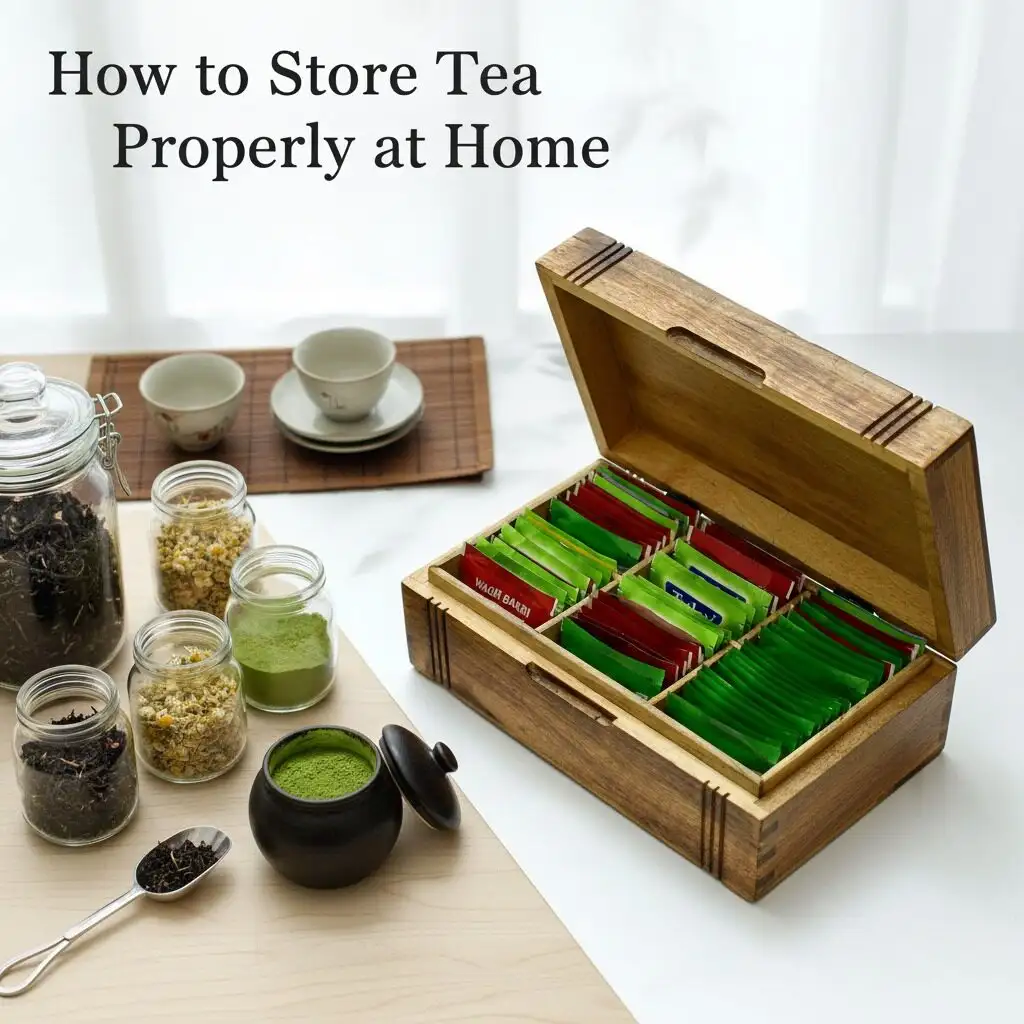
If it can hold water, it can protect tea from air and moisture. Metal tins, ceramic jars, or handcrafted wooden tea boxes work best. Use smaller containers for daily use and a larger box for bulk storage.
2. Separate Teas by Type
Use tea box with compartments for different varieties. Avoid mixing herbal, green, and masala teas. FIFO (first-in-first-out) ensures older tea is consumed first.
3. Avoid Heat Sources
Do not store near stoves or under sunlight. Closed kitchen shelves or dedicated tea drawers maintain a stable temperature.
4. Control Moisture During Monsoon
Keep containers fully sealed. Store in elevated cabinets or away from sinks. Consider a desiccant pack in long-term storage boxes.
5. Prevent Odor Contamination
Keep tea separate from strong spices. Avoid refrigeration for most teas (except matcha in tightly sealed containers).
Unique Visual Concept: Wrong vs Right Storage
| Wrong Setup | Right Setup |
|---|---|
| Tea in open packet | Airtight container |
| Near stove and spice box | Closed cabinet, away from heat and odors |
| Frequent exposure | Separate daily-use container for minimal exposure |
Visual insight: In Indian households, even high-quality tea loses 70% of aroma in 3 weeks if stored incorrectly. Using a Wooden Tea Storage Box can help reduce exposure to light and air, improving aroma retention.
Storage Options for Indian Homes
Across over 5,000 orders, households using structured tea storage solutions reported aroma retention of 80–90% after 3 weeks compared to 50–60% in unorganized setups.
Common Tea Storage Mistakes
Most people blame the brand, but storage is responsible for over 70% of aroma loss.
Practical Tips for Daily Use
Key Takeaways
Remember: Correct storage is more important than premium tea brands. A small investment in proper containers and organization ensures every cup tastes as intended. To learn more, read How to Store Tea Properly at Home.
Protect Your Daily Ritual
If your tea smells weaker after 2–3 weeks, your storage—not the brand—is the problem. Upgrade your kitchen setup now to keep every cup aromatic and flavorful.