
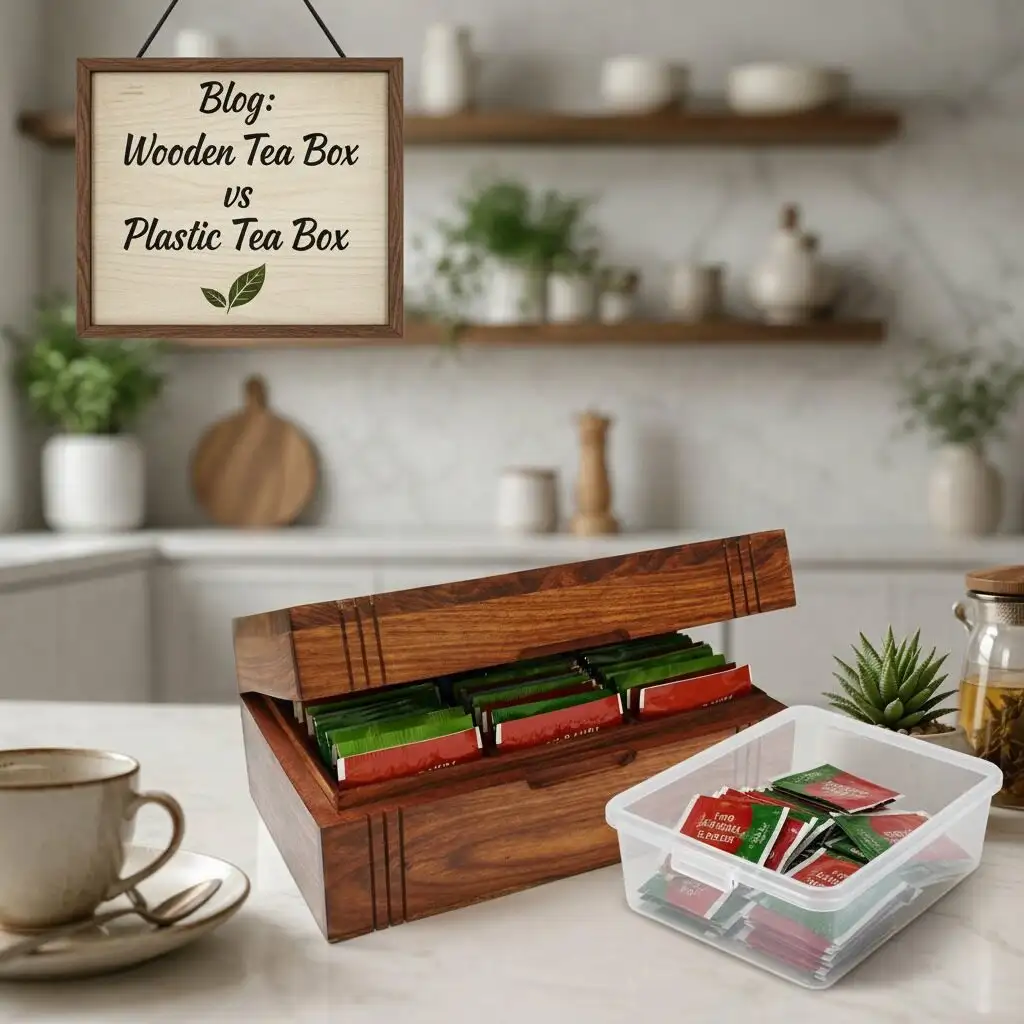
Tea is a daily ritual in Indian households, from steaming cups of Assam tea in Mumbai apartments to refreshing green tea in Bangalore’s humid homes. Choosing the right storage—wooden tea box vs plastic tea box—is essential to maintain flavor, aroma, and hygiene. The wrong container can degrade taste, absorb odors, or fail to protect your tea in India’s varying climates.
At India House Store, we specialize in handcrafted, durable wooden tea boxes designed to preserve tea quality while complementing Indian kitchen aesthetics.
Why Tea Storage is Critical
Tea quality depends on five major factors:
Proper storage addresses these issues, and material choice directly impacts tea longevity.
Wooden Tea Box vs Plastic Tea Box: Comparative Table
| Feature | Wooden Tea Box | Plastic Tea Box | City-Specific Advice |
|---|---|---|---|
| Material | Sheesham, mango, or teak; breathable and insulating | Polypropylene or low-grade plastic; lightweight | Mumbai monsoon → prefer airtight wood; Chennai heat → keep wooden box away from stove; Bangalore humidity → sealed wooden box works best |
| Durability | 5–10 years; resistant to warping | 1–3 years; prone to cracking & discoloration | Mumbai → plastic may warp; Bangalore → moisture affects plastic integrity |
| Flavor Preservation | Retains aroma; blocks light & humidity | May leach chemicals or absorb odors | Delhi → dry winters → minimal difference; humid cities → wood superior |
| Hygiene | Smooth, easy to clean; resists bacterial growth | Scratches trap bacteria; difficult to clean | Kitchens with high cooking activity → wood is safer |
| Aesthetics | Handcrafted, elegant; complements décor | Often inexpensive, basic design | Indian kitchens favor wooden tea chest for style |
| Environmental Impact | Biodegradable, sustainable | Non-recyclable, contributes to plastic waste | Eco-conscious households → choose wood |
| Price (INR) | ₹1,200 – ₹3,500 | ₹300 – ₹1,200 | Consider investment vs replacement cost |
Key Insight: In humid or high-heat Indian cities, wooden tea boxes outperform plastic for both durability and tea preservation.
How Material Affects Tea Quality
Wooden Tea Boxes:
Plastic Tea Boxes:
Data Point: Studies show tea stored in untreated plastic may lose 15–25% aroma over 6 months in humid conditions, while using a Wooden Tea Storage Box can reduce this loss to under 5%.
Advantages of Wooden Tea Boxes
“Each wooden tea box is hand-finished in Jaipur to preserve tea aroma while highlighting natural wood grains,” – Rohit Sharma, India House Store craftsman.
Disadvantages of Plastic Tea Boxes
Alternative Materials
Hyper-Local Storage Tips
Scientific Insights
Tea contains antioxidants such as catechins and polyphenols. Exposure to light, heat, and moisture degrades these compounds:
Wood acts as a natural barrier against environmental stressors, maintaining nutritional and flavor quality. For a detailed comparison, see Wooden Tea Box vs Plastic Tea Box: Which Better?.
Wooden Tea Box Care Tips
Visual & UX Suggestions
FAQ Section
A: Airtight wooden boxes prevent warping and protect aroma, outperforming plastic.
A: Low-quality plastics may accelerate oxidation, reducing antioxidant content by up to 20% in humid climates.
A: Dry cloth wiping is sufficient; avoid detergents and sunlight.
A: Yes, hybrid storage retains flavor and eases organization.
A: Yes. Biodegradable, eco-friendly, and sourced from certified Indian forests.
A: 5–8 years with proper care; heat-resistant varieties last longer.
Protect Your Tea Today
Don’t let flavor fade in Indian kitchens! Invest in a wooden tea box today and experience freshness, style, and eco-conscious living.
"Durable, artisan-crafted, and perfect for monsoon or summer storage."