
India House

United States dollar ($) - USD
  • United States dollar ($) - USD
  • Euro (€) - EUR
  • Pound sterling (£) - GBP
  • Australian dollar ($) - AUD
  • Indian rupee (₹) - INR

How to Store Loose Tea Properly

How to Store Loose Tea Properly

How to Store Loose Tea Properly | India House Store

Loose tea is part of a daily routine in millions of homes across India and the United States. From compact city apartments to larger home kitchens, it offers aroma, flavor, and a familiar daily ritual. However, many people face the same issue—tea gradually losing its freshness after opening. Exposure to heat, humidity, light, air, and surrounding kitchen odors can reduce flavor and aroma, often leading to wasted tea.

Knowing how to store loose tea properly is important for maintaining its freshness and flavor, especially in environments where climate conditions vary. India House Store focuses on practical storage solutions designed for everyday use, helping keep tea fresh for longer when stored correctly.

Quick Storage Checklist

Before diving into detailed guidance, here’s a quick overview of best practices:

Use airtight containers (tin, ceramic, or dark glass)
Store in a cool, dry, dark place, away from sunlight and heat sources
Prevent contact with moisture and kitchen steam
Keep tea away from strong odors like spices, soaps, or detergents
Separate different tea types to prevent flavor mixing
Label containers with purchase date and tea type
Consider refrigeration only for delicate green teas or matcha
Use modular storage boxes or wooden tea caddies for organized storage

The Five Enemies of Loose Tea

Premium loose tea loses its flavor due to five main factors. Understanding these scientifically ensures maximum freshness:

Light: Exposure to sunlight or bright indoor lighting triggers photo-oxidation, breaking down tea compounds responsible for aroma. Use opaque containers such as ceramic jars, tin boxes, or dark glass bottles.
Air: Oxygen accelerates oxidation and flavor loss. Airtight containers reduce chemical degradation, preserving both volatile oils and polyphenols.
Moisture: Tea leaves are hygroscopic and absorb moisture from the air, which can lead to clumping, mold, or off-odors. In humid environments—such as cities like Mumbai or Miami—store tea in a well-sealed wooden tea box and keep it away from damp areas.
Heat: High temperatures speed up chemical breakdown of catechins and aromatic compounds. Store tea away from stoves, ovens, or sunlight, ideally at 20–25°C in urban apartments or traditional kitchens.
Odor: Tea absorbs surrounding scents easily, which can alter flavor. Avoid storing near spices, scented candles, or detergents.
Expert Insight

"Even slight moisture in the leaves can shift flavor from floral to flat within a week. Proper containment and region-specific storage are crucial." – Ramesh Gupta, Darjeeling artisan tea blender.

Hyper-Local Storage Tips for Kitchens

Different regions and home types require specific storage adaptations:

Coastal & Humid Areas (e.g., Mumbai, Kerala, Miami): High moisture levels can affect tea quality. Use a wooden tea box with a tight-fitting lid and keep it away from windows, steam, and damp kitchen areas.
Warm & Tropical Conditions (e.g., Kerala, Florida): Tea can absorb surrounding odors easily. Store it in a well-sealed wooden tea box inside a closed cabinet to maintain flavor.
Moderate Climate (e.g., Bangalore, San Diego): Humidity is less intense, but exposure to sunlight can still reduce aroma. Keep a wooden tea box in a shaded, dry place for daily use.
Compact vs Spacious Homes: In smaller kitchens, a compact wooden tea box with compartments helps organize different tea types without clutter. In larger spaces, a dedicated tea storage box keeps everything neatly arranged.

Best Containers for Loose Tea

The right container preserves both aroma and flavor:

Materials: Tin, ceramic, or dark glass are preferred. Avoid plastic or transparent glass, which can leach odors or allow photo-oxidation.
Airtight Seal: Essential to prevent moisture and air exposure.
Compartmentalization: Store delicate teas (green, white) separate from robust teas (black, oolong).
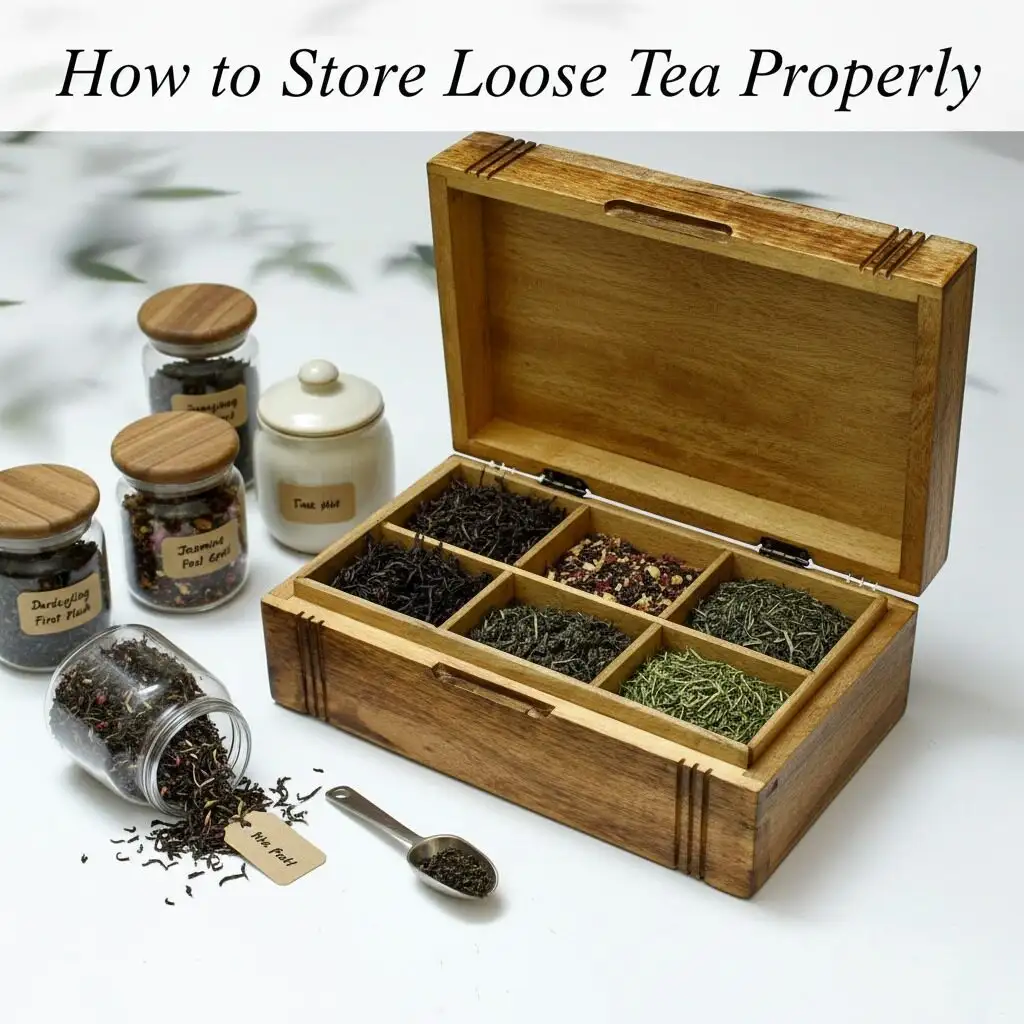
Artisan Options: Handcrafted wooden tea boxes provide natural airflow while blocking light, combining practicality with aesthetics.

Pro Tip: For urban kitchens, modular tea boxes allow easy stacking and labeling, keeping tea organized and fresh.

Shelf-Life of Loose Tea

Knowing tea lifespan helps prevent flavor loss and waste:

Tea Type Shelf-Life Notes
Black Tea 18–24 months Robust; less sensitive to light and air
Green Tea 6–12 months Delicate; store in airtight containers with low humidity
White Tea 6–12 months Fragile; avoid moisture and direct sunlight
Oolong Tea 12–18 months Semi-oxidized; moderate sensitivity
Herbal Tea 6–12 months Spiced blends absorb odors; store separately
Black Tea
Lifespan18–24 months
NoteRobust; less sensitive to light/air
Green & White Tea
Lifespan6–12 months
NoteDelicate; store in low humidity

Scientific Note: Flavor compounds such as polyphenols degrade faster under heat and humidity. Proper storage preserves antioxidants and aroma molecules.

Refrigeration: When It Works

Refrigeration is generally discouraged due to condensation risk but can be used for large batches of green tea or Japanese matcha, if:

Stored in airtight containers
Limited exposure to temperature fluctuations
Consumed within weeks

For most households, room temperature storage with airtight tins or handcrafted wooden tea boxes is safer and more practical.

2026 Innovations in Tea Storage

Modern storage solutions provide extra freshness and convenience:

Modular Tea Boxes: Stackable compartments for multiple tea types.
Eco-Friendly Liners: Prevent flavor absorption and moisture ingress.
Humidity Sensors: Small indicators showing if air moisture exceeds safe levels.
Smart Airtight Tins: Seal automatically and maintain optimal airflow.

Practical Storage Life-Hacks

Small Batch Storage: Open only small portions at a time to reduce oxidation.
Labeling Systems: Track purchase date and tea type for freshness management.
Tea Corners: Dedicate a cupboard or shelf for tea storage, away from heat and odor sources.
Space-Saving Solutions: Magnetic wall-mounted compartments or over-the-door organizers for urban kitchens.

India House Store Solutions

India House Store provides high-quality loose tea storage solutions, including:

Handcrafted wooden tea boxes with dividers
Airtight tins and tea caddies
Modular and eco-friendly designs for urban and traditional kitchens

Well-designed wooden tea boxes help preserve aroma even in humid conditions when tea is stored properly inside.

Tea Storage FAQ

Q1. How long does loose tea last?

Black tea: 18–24 months. Green/White tea: 6–12 months. Proper storage significantly affects shelf-life.

Q2. Can I refrigerate loose tea?

Only for large batches of delicate green tea or matcha, stored airtight. Most homes should store at room temperature.

Q3. What container is best for kitchens?

Airtight tins, ceramic jars, dark glass containers, or handcrafted wooden tea boxes.

Q4. How to prevent tea from absorbing odors?

Store away from spices, scented candles, or detergents. Double-sealed boxes work well in humid kitchens.

Q5. Are wooden tea boxes suitable for urban apartments?

Yes, modular tea boxes save space while maintaining freshness and organizing multiple tea types.

Transform Your Tea Ritual Today

Protect your premium loose tea and enjoy every cup at peak flavor. Join 10,000+ tea lovers who have upgraded to India House Store storage.

Aroma Lock
Preserves flavor for up to 12 months.
100% Sustainable
Eco-friendly seasoned wood.
Fast Delivery
Ships across India & USA.
Shop Handcrafted Tea Boxes & Airtight Tins
Secure Checkout 4.9/5 Rating Easy Returns

"The perfect balance of heritage craftsmanship and modern moisture protection."