
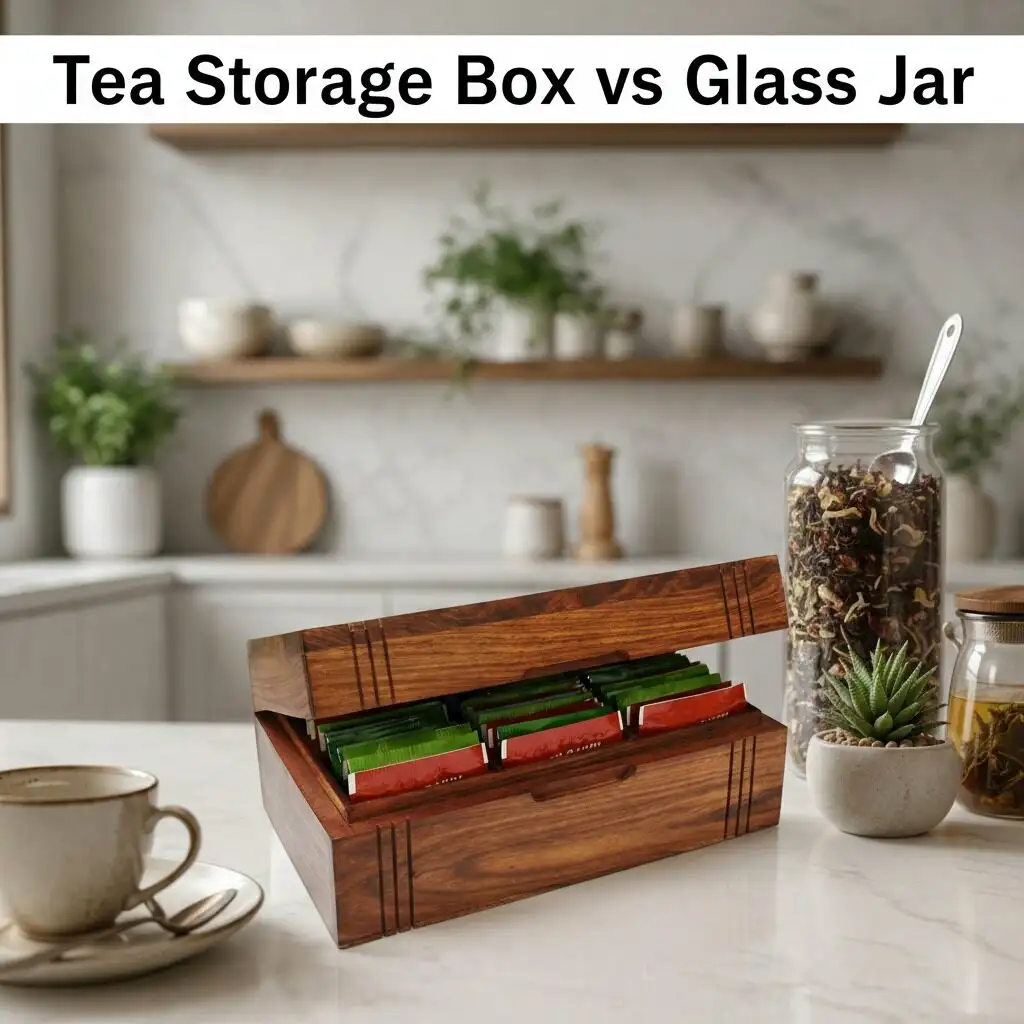
In many homes, tea is not stored with much thought. It is poured into whatever container is available — often a glass jar sitting near the stove or window. Over time, people notice something is wrong. The tea smells weaker. The taste becomes flat. Sometimes it even feels slightly stale within a few weeks.
This is where the confusion begins: Tea Storage Box vs Glass Jar — which one actually protects tea?
This page explains that clearly, based on how tea behaves, how kitchens function, and what actually works in daily use.
Why Tea Storage Matters More Than Most People Think
Tea leaves are not stable. They react with their surroundings. Three things happen when tea is stored incorrectly:
In controlled environments, tea can stay fresh for 4–6 months. In typical kitchens, poor storage can reduce this to 3–6 weeks. This is the real problem most households face — not knowing that the container itself is causing the issue. Choosing reliable options from India House Store can help improve storage conditions and extend freshness.
Tea Storage Box vs Glass Jar: Real Comparison Based on Daily Use
Light Exposure: The Hidden Problem in Glass Jars
Most people choose a glass jar for tea storage because it looks clean and allows visibility. But this visibility is the problem. Tea contains compounds like catechins and essential oils. When exposed to light, especially sunlight, these begin to break down. This is not immediate, but gradual.
In cities like Bangalore or San Diego, where kitchens often have natural light, or Mumbai and Miami, where sunlight and humidity combine, tea stored in glass jars can lose its aroma faster than expected. A tea storage box blocks light completely. This directly improves tea flavor preservation, especially for green tea and herbal blends.
Air and Oxidation: Why Airtight Matters
Every time a container is opened, air enters. Oxygen reacts with tea leaves in a process similar to slow aging. Glass jars rely on rubber seals. Over time, these seals loosen slightly. Even a small gap allows air exchange. A well-made tea box, especially one designed for airtight tea storage, reduces this exposure. The difference is not theoretical — it is noticeable in taste after a few weeks.
Moisture: The Biggest Issue in Kitchens
Humidity is a constant factor in homes.
• In Chennai / Miami and Mumbai / Houston, moisture stays high for most of the year
• In Mysore / Orlando and Bangalore / Seattle, rainy months increase indoor humidity
• In Delhi / Chicago, temperature changes can cause moisture to form inside containers
Tea absorbs moisture quickly. Once this happens: Leaves lose crispness, aroma weakens, and flavor becomes dull. Glass jars are not always reliable here. Even when sealed, repeated opening allows humid air inside. Tea boxes perform better when used correctly because they reduce exposure cycles and often include internal compartments.
Durability: What Happens in Real Kitchens
A common but overlooked factor in tea storage box vs glass jar is durability.
This is not just about safety — it is about practicality in daily routines.
Organization: A Daily Convenience Factor
Most households use more than one type of tea: regular chai, green tea, and herbal or flavored tea. Glass jars require separate containers for each type. This increases clutter. Tea boxes allow organized storage in one place. This improves usability and supports better tea organization ideas.
Tea Storage Box vs Glass Jar: Data-Based Comparison
| Feature | Tea Storage Box | Glass Jar |
|---|---|---|
| Light Protection | Blocks 100% light | Allows light exposure |
| Avg Freshness | 4–6 months | 2–3 months |
| Moisture Resistance | Moderate to high | Low to moderate |
| Breakage Risk | Very low | High |
| Daily Usability | High | Medium |
| Multi-Tea Storage | Yes | No |
These values are based on typical usage patterns in homes, not lab conditions. Using a Wooden Tea Storage Box helps align real-world storage closer to these optimal conditions.
A Practical Scenario Most People Relate
In many homes, tea is stored in a glass jar placed near the cooking area. The jar is opened multiple times a day. Steam from cooking rises, and over time, small amounts of moisture enter the jar. Within a month, the tea: Smells less strong, tastes slightly flat, and loses its original character.
The same tea stored in a tea box, kept slightly away from heat and light, maintains its aroma longer. This is the difference people notice but often cannot explain.
Where Glass Jars Still Make Sense
A balanced view is important. Glass jars are useful when:
They are also useful for display purposes. But for long-term storage, especially in kitchens, they are not the most reliable choice.
Choosing the Best Tea Storage Option
The choice between tea storage box vs glass jar depends on how tea is used at home. If tea is part of daily routine, exposed to heat, humidity, and frequent handling, a tea box is more practical. If tea is stored for short periods and used quickly, a glass jar can work. For most households, the best tea storage option is an opaque, well-closed tea storage box.
What Makes a Good Tea Storage Container
These factors matter more than appearance.
India House Store: Practical Storage for Homes
India House Store focuses on storage solutions that match real usage, not just display. Our tea storage products are designed considering: Kitchen layouts, climate variations, and daily usage habits. We work with materials and designs that help maintain tea freshness while fitting naturally into home spaces. For a better comparison, explore Tea Storage Box vs Glass Jar.
Final Verdict: Tea Storage Box vs Glass Jar
The difference becomes clear through daily use: glass jars look appealing but expose tea to light and risk. Tea storage boxes protect tea better. For households that want consistent taste and longer freshness, a tea storage box is the more reliable choice.
"If your tea has been losing aroma or taste faster than expected, the storage method is likely the reason. Explore India House Store’s range and choose a solution that fits your usage pattern."