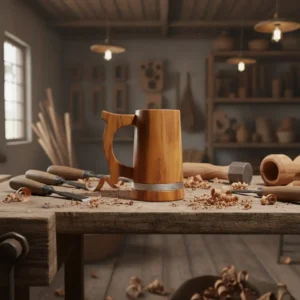
The question—Are Wooden Beer Mugs Safe to Drink From?—appears frequently on UK beer forums, woodworking discussions, and buyer research threads. Many people feel uncertain because wood behaves differently from glass, ceramic, or steel. Concerns usually focus on liquid absorption, hygiene, taste changes, and long-term safety.
Interest has grown alongside demand for handmade drinkware. Indian artisans have produced wooden vessels for generations, using carefully seasoned timber and manual shaping techniques. When these products reach UK buyers, modern expectations around safety and maintenance apply. This article explains the facts clearly, without exaggeration, so buyers can decide with confidence.
Why This Topic Matters to Buyers
Most buyers asking are wooden beer mugs safe to drink from are either planning to purchase or have already purchased one. Their intent centers on reducing risk—avoiding hygiene issues, wasted money, or unpleasant surprises after use.
Online information often creates confusion. Some sources claim wooden mugs never allow bacteria growth, while others warn against wood entirely. Both extremes misrepresent reality. Safety depends on material quality, finishing methods, and user habits. Clear information supports informed buying and realistic expectations, especially for those choosing handmade products rooted in traditional craftsmanship.
Common Questions and Concerns
Does wood absorb beer?
Wood can absorb liquid by nature. Dense hardwoods absorb far less than softwoods. Proper sealing further limits absorption. A well-finished mug does not soak up beer during normal use.
Can bacteria grow inside wooden beer mugs?
Bacteria growth becomes possible if moisture remains trapped. This risk increases when mugs are left wet for long periods. Thorough drying after washing significantly reduces this issue, similar to care required for wooden chopping boards.
Does beer taste different in a wooden mug?
Taste changes usually occur only during early use if the interior finish has not fully cured. After proper curing and cleaning, flavour transfer remains minimal.
Are all wooden mugs safe for drinking?
No. Decorative mugs or souvenir pieces without food-safe finishes should not hold beverages. Safety depends strictly on construction and finishing methods.
Traditional Perspective & Modern Usage
Wooden vessels have long been used across Indian households for water, fermented drinks, and dairy. This tradition often raises the question, are wooden beer mugs safe to drink from , especially when artisans used seasoned hardwood and natural oils to protect the surface. These practices focused on practicality rather than decoration.
Modern wooden beer mugs usually serve occasional rather than constant use. Cold or cool beverages suit wood best. Heat causes expansion and contraction that may weaken finishes.
Standing liquid should not remain inside for extended periods. Wooden mugs feel warmer than glass and offer insulation, yet they require mindful handling to prevent warping.
How to Choose the Right Product
Care, Maintenance, and Longevity
Proper care determines the lifespan of your mug. A well-made mug can serve reliably for years if treated correctly.
Who This Product Is (And Isn't) For
Wooden beer mugs suit people who value traditional materials and handmade craft. They work well for casual home use, social gatherings, or themed occasions. They are excellent gifts for those who appreciate natural materials and cultural craftsmanship.
However, people seeking low-maintenance drinkware may prefer glass or stainless steel. Wooden mugs do not suit frequent hot beverage consumption, and dishwasher-only households may find the care requirements inconvenient.
Frequently Asked Questions
Conclusion: Mindful Use Rewards the Buyer
So, Are Wooden Beer Mugs Safe to Drink From? The answer lies in wood quality, finishing, and user care. Wood can hold beer safely when chosen and maintained correctly.
UK buyers benefit from understanding limitations alongside benefits. Wooden beer mugs reward mindful use rather than convenience-driven habits. Informed decisions support both buyer satisfaction and artisan craftsmanship. If you are interested in unique, artisan-made drinkware, you can browse related handcrafted collections from India House>.