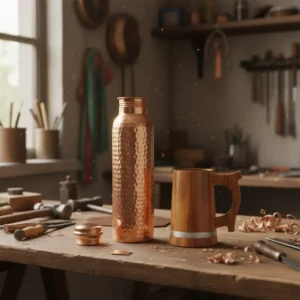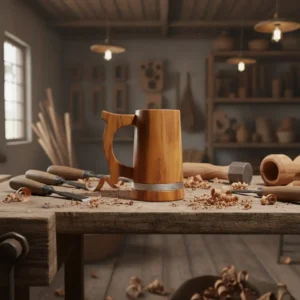
When buying handmade products, materials matter as much as design. This page explains what we mean by pure copper and food-safe wood, how to identify genuine materials, and why honesty around sourcing and finishes is important for everyday-use items. At India House Stores, we believe customers should understand exactly what they are buying and how it is made.
What “Pure Copper” Really Means
Pure copper refers to copper that is used in its natural metal form, without inner lining, plating, or synthetic coating. A pure copper product:
Copper-coloured products, on the other hand, are often made from other metals and coated to resemble copper.
How to Spot Fake or Coated Copper Bottles
Not all copper bottles sold online are made from solid copper. Some are plated or lined, which changes how they function and age.
Understanding these differences helps buyers make informed choices.
Food-Safe Wood Explained
Wooden products intended for drinkware must be made from suitable hardwoods and treated correctly. Food-safe wood refers to:
Food-safe does not mean untreated. It means the wood has been prepared in a way that supports safe, practical use when cared for properly.
Natural Finishes vs Synthetic Coatings
The finish applied to copper and wooden products affects both appearance and usability.
Allow the material to age naturally, do not seal the surface completely, and show patina in copper and grain changes in wood.
Preserve a fixed appearance, prevent natural ageing, and can limit proper use, especially for copper bottles.
At India House Stores, we prioritise finishes that respect the natural behaviour of materials rather than masking them.
Why Materials Matter for Daily-Use Products
Products used daily come into regular contact with hands, water, and cleaning. Using genuine materials ensures predictable behaviour over time. Authentic materials:
Choosing real materials reduces uncertainty and improves long-term use.
Certifications, Testing, and Quality Checks
Handmade products are not always produced in certified factories, but quality checks are still important. Our approach includes:
Where applicable, we follow material guidelines suitable for handmade household products. Transparency is prioritised over labels that may not apply to small-scale craft.
How Authentic Materials Age Over Time
Real materials change with use. This change is expected and valued.
These changes are signs of authenticity, not defects.
Our Commitment to Honest Craftsmanship
At India House Stores, we work directly with artisans and small workshops. This allows us to remain clear about what materials are used and how products are made.
Our commitment includes: No misleading material claims, clear explanations of finishes and usage, respect for traditional methods, and honest communication with customers. We believe trust is built through clarity, not exaggeration.