Many people search for How to Clean and Maintain a Copper Water Bottle Without Damaging It after noticing dark patches, colour changes, or green residue inside their bottle. These visible changes often lead to doubts about safety, durability, or whether the bottle remains usable.
Copper behaves differently from steel, glass, or plastic. It reacts naturally with air and water, which causes visible surface changes over time. This reaction does not indicate poor quality. In handmade Indian copper bottles, such changes are expected because the surface remains untreated and free from artificial coatings. This article explains how copper reacts, how it should be cleaned, and how long-term care works in real use to support confident ownership.
Why This Topic Matters to Buyers
How to Clean and Maintain a Copper Water Bottle is a common question buyers research for practical reasons. The intent is not decorative; it focuses on safety, lifespan, and correct usage. First, people want to protect their purchase. Handmade copper bottles involve skilled labour and traditional techniques, and incorrect cleaning methods can shorten their usable life.
Second, visible changes create confusion. Many users assume tarnish or green residue means corrosion or contamination, which is not accurate. Without clear guidance, people either over-clean or stop using the bottle altogether.
Common Questions and Concerns
Traditional Perspective & Modern Usage
How to Clean and Maintain a Copper Water Bottle is informed by practices that existed long before modern cleaners. Copper water vessels have existed in Indian households for generations. Traditional care relied on natural ingredients such as lemon, tamarind, salt, or ash mixed with water. These materials removed oxidation without harming the metal. There was no expectation of permanent shine; colour variation reflected regular use rather than neglect.
Modern Usage: Modern copper water bottles suit daily hydration when used correctly. Most handmade bottles consist of pure copper without internal lining or coating.
How to Choose the Right Product
Care, Maintenance, and Longevity
Understanding how to clean a copper bottle ensures it lasts for years.
Why Copper Changes Colour
Copper reacts with oxygen and moisture. This reaction creates darkening or green residue. The process is natural and unavoidable. Cleaning removes surface oxidation only, not the copper itself.
Daily Care Routine
Weekly Cleaning Method
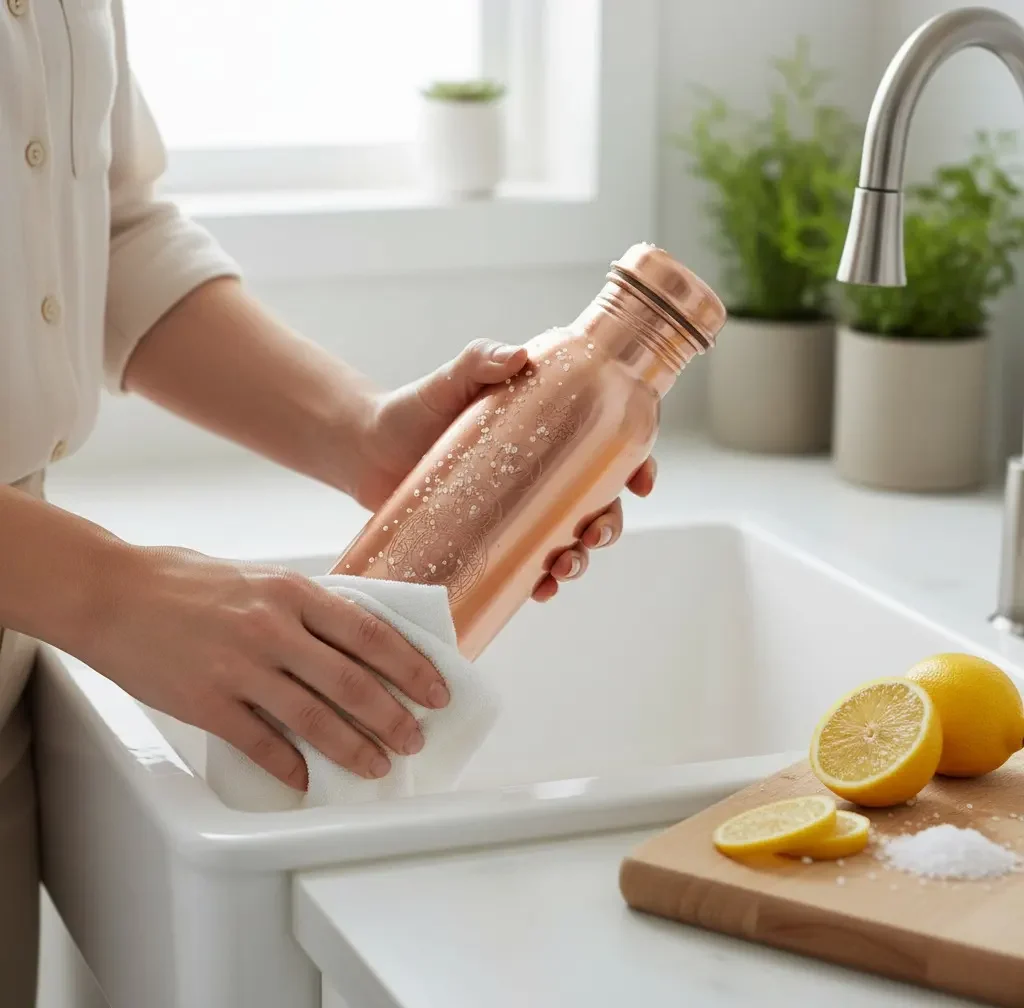
If green residue appears inside the bottle, clean immediately using lemon and salt. Rinse well and allow full drying. Regular care prevents repeated buildup.
What to Avoid (Common Mistakes)
Who This Product Is (And Isn't) Suitable For
Suitable For: People who prefer natural materials, appreciate handmade craftsmanship, follow simple care routines, and drink room-temperature water. They also work well as meaningful gifts for weddings or housewarmings.
Not Suitable For: Users who expect zero maintenance, prefer flavoured or chilled drinks, use dishwashers exclusively, or want a permanently shiny surface. Glass or stainless steel bottles may serve these needs better.
Frequently Asked Questions
Conclusion
Understanding How to Clean and Maintain a Copper Water Bottle Without Damaging It removes confusion from daily use. Colour change and oxidation are natural behaviours of copper, not signs of poor quality or safety issues.
Handmade copper bottles respond well to consistent, gentle care. Simple routines preserve surface integrity and support long-term use. Readers who wish to learn more about handmade copper craftsmanship or explore related collections can continue through additional educational resources from India House.