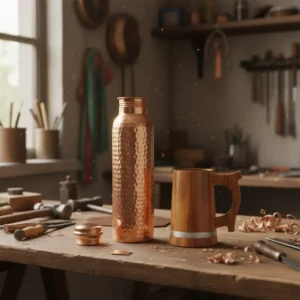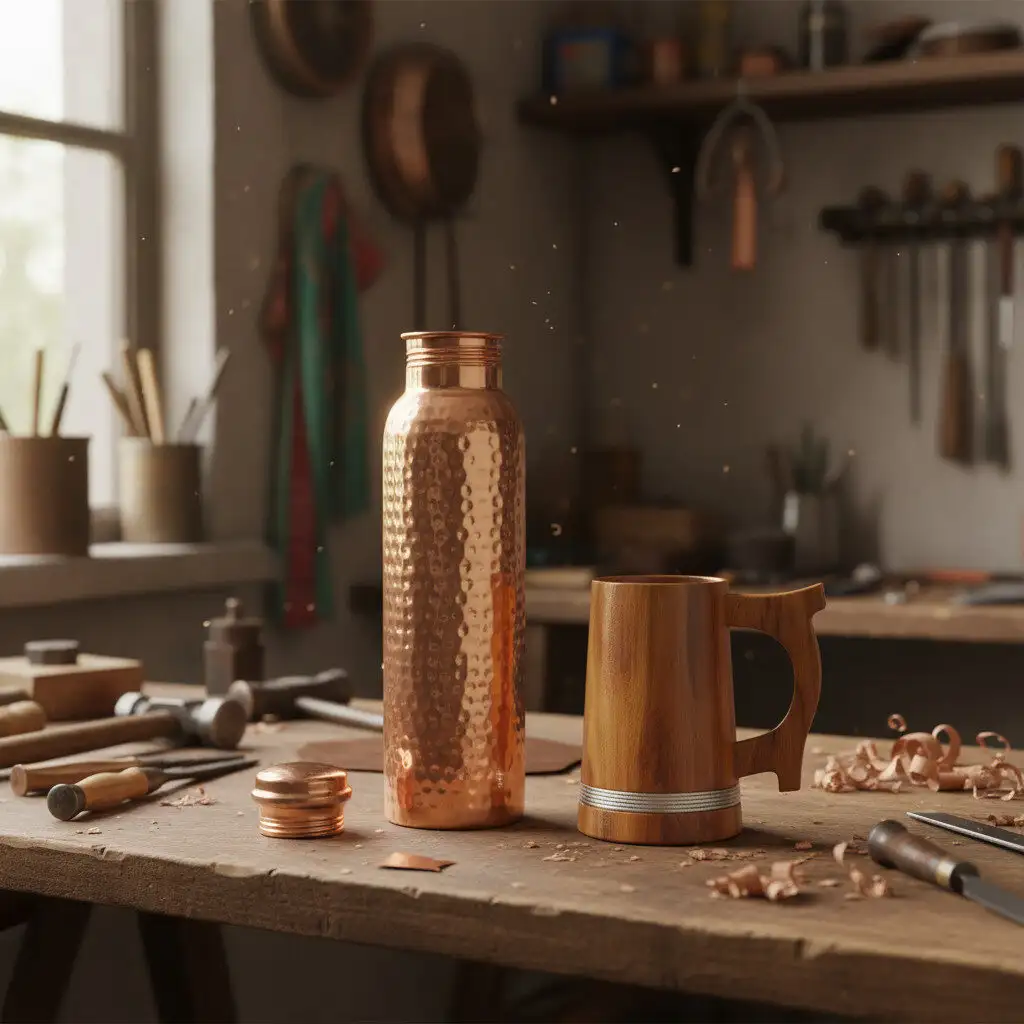
Tradition, Skill, and the Human Work Behind Every Bottle
Copper craftsmanship in India is not a recent trend. It is a living tradition shaped by centuries of practice, regional knowledge, and skilled hands. Long before copper bottles became popular in modern homes, Indian artisans were shaping copper vessels for daily household use using techniques passed down through generations.
At India House Stores, our copper bottles are rooted in this tradition. Each piece reflects time, care, and the experience of artisans who continue to practise metalwork as it has been done for hundreds of years.
The History of Copper Craft in India
Copper has held an important place in Indian households for centuries. Traditionally, copper vessels were used for storing water, cooking, and ritual purposes. The craft developed not through factories, but through family-run workshops where skills were learned through observation and repetition.
These methods relied on simple tools, controlled heat, and hand shaping. Over time, regional styles emerged, each with its own approach to forming, joining, and finishing copper items. This history forms the foundation of the copper bottles made today using traditional techniques.
Regions Known for Traditional Copper Work
Copper craft in India is closely linked to specific regions where metalworking has been practiced for generations. Some regions are known for:
Artisans from these areas often specialise in copper alone, focusing their skills on shaping and refining the metal rather than mass production. Their regional knowledge influences the thickness, balance, and durability of each bottle.
How Artisans Handcraft Copper Bottles
Handcrafting a copper bottle is a slow and deliberate process. Unlike factory production, each step is done manually. The process generally includes:
Because the work is done by hand, no two bottles are exactly alike. Minor variations are a natural result of genuine craftsmanship.
Why Handmade Copper Is Different From Machine-Made
Handmade copper bottles differ from machine-made ones in several important ways. Handcrafted copper bottles typically have:
Machine-made bottles are designed for speed and volume. Handmade bottles are created for durability, authenticity, and long-term use.
Ethical Sourcing and Artisan Livelihoods
Copper craftsmanship supports skilled livelihoods that depend on fair work and consistent demand. For many artisans, copper work is not a side activity but a primary source of income. Ethical sourcing means:
By choosing handmade copper bottles, buyers help sustain traditional skills that might otherwise decline.
Why We Work Directly With Artisan Communities
India House Stores works directly with artisan groups rather than sourcing from intermediaries or large manufacturing units. This approach allows us to:
Working closely with artisans also allows us to preserve traditional techniques rather than replacing them with machine processes.
From Indian Workshops to UK Homes
Each copper bottle begins its journey in a small workshop in India and ends up in homes across the UK. Along the way, the bottle carries more than just water—it carries the story of the hands that shaped it.
For UK customers, these bottles offer a connection to traditional craft while fitting naturally into modern daily routines. The result is a functional object with cultural meaning, not just a decorative item.
How This Craft Is Preserved Through Conscious Buying
Traditional copper craft survives when people choose quality and authenticity over shortcuts. Conscious buying helps ensure that these skills continue to be practised rather than replaced. When buyers choose handmade copper bottles:
Every purchase supports the continuation of a skill that has taken centuries to develop.