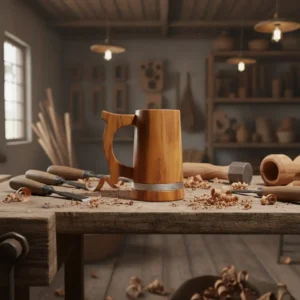
Searches for What Makes a Handcrafted Wooden Beer Mug Different from Factory-Made Ones usually come from buyers who want clarity before choosing wooden drinkware. Many online listings describe mugs as “handcrafted” or “artisan-made” without explaining what actually changes in terms of quality, safety, durability, or everyday use. This leads to confusion, especially for buyers comparing handmade wooden beer mugs with factory-produced alternatives.
In the Indian handmade context, wooden vessels have long been shaped using manual tools and local knowledge of wood behaviour. While beer consumption itself is modern, the woodworking techniques behind handcrafted wooden beer mugs come from established craft practices. Understanding how these differ from factory manufacturing helps buyers decide based on function, care, and long-term value rather than appearance alone.
Why This Topic Matters to Buyers
Buyers researching this topic are not only looking for visual appeal. They want to know whether a handcrafted wooden beer mug performs differently from a factory-made one. Common questions include whether handmade mugs last longer, whether they are safer for beverages, and whether the price difference reflects real value.
Another reason this topic matters is inconsistent online information. Some product pages focus heavily on selling, while others make broad claims without explanation. Buyers want practical, factual guidance so they can choose a mug that fits their usage habits, maintenance comfort, and expectations.
Common Questions and Concerns
What Makes a Handcrafted Wooden Beer Mug Different is primarily the attention to wood selection, seasoning, and surface treatment. Safety depends on wood type, seasoning, and surface treatment. Handcrafted wooden beer mugs are usually made from food-safe hardwoods and finished using natural oils or waxes suitable for beverage contact. Factory-made mugs may also use food-safe finishes, but buyers should verify this, as production speed sometimes leads to decorative coatings unsuitable for drinkware.
Traditional Perspective & Modern Usage
In India, wooden household items such as bowls, cups, and storage vessels have been made by hand for generations. Craftspeople relied on experience to select appropriate wood and shape it using chisels and hand lathes. The goal was functional reliability rather than identical output. Handcrafted wooden beer mugs follow this same approach.
What Makes a Handcrafted Wooden Beer Mug Different becomes clear in modern homes where these mugs are used for casual beer drinking, social gatherings, and themed home bars. Users should expect natural variations in colour, grain pattern, and weight. Factory-made mugs offer consistent size and shape, which can be helpful for stacking. However, handcrafted mugs perform better for those who value character over uniformity. Neither type is suitable for dishwashers, microwaves, or prolonged soaking.
Handcrafted vs Factory-Made: Key Differences
| Aspect | Handcrafted Wooden Beer Mug | Factory-Made Wooden Beer Mug |
|---|---|---|
| Production method | Shaped and finished individually by artisans | Cut and assembled using machines |
| Material handling | Wood grain considered during shaping | Standardised cuts regardless of grain |
| Appearance | Natural variation in colour and texture | Uniform look across units |
| Wall thickness | Often slightly thicker for durability | Usually consistent, sometimes thinner |
| Finish | Hand-applied food-safe oils or waxes | Sprayed or dipped finishes |
| Output volume | Limited batches | High-volume production |
| Buyer experience | Craft-focused, material-aware | Convenience-focused, uniform |
This comparison highlights why the difference goes beyond appearance and affects long-term ownership.
How to Choose the Right Product
Material Quality Indicators
What Makes a Handcrafted Wooden Beer Mug Different often starts with the choice of hardwoods such as mango wood, sheesham, or oak. The wood should feel solid, with no visible cracks or soft spots. Grain patterns should appear natural rather than overly uniform.
What Buyers Should Check Before Purchasing
Care, Maintenance, and Longevity
Proper care significantly extends the life of a wooden beer mug. Users should wash gently using mild soap, rinse quickly, and dry immediately with a cloth. The mug should then air-dry fully in an open space.
Avoid soaking, abrasive scrubbers, dishwashers, direct heat, or storing while damp. Occasional oiling with a food-grade oil helps maintain the surface and prevent drying or cracking.
Who This Product Is (And Isn't) Suitable For
Suitable For: Handcrafted wooden beer mugs suit people who value material quality and manual workmanship. They work well for home users who enjoy natural materials, cultural objects, or handmade décor. They are perfect for gifting when the recipient appreciates craftsmanship.
Not Suitable For: These mugs may not suit people who want dishwasher-safe drinkware or use mugs heavily every day. Commercial environments requiring identical items may prefer factory-made options.
Frequently Asked Questions
Conclusion
Understanding What Makes a Handcrafted Wooden Beer Mug Different from Factory-Made Ones helps buyers make decisions based on function, care, and long-term expectations rather than marketing terms. Handcrafted mugs reflect individual workmanship and material awareness, while factory-made mugs focus on consistency and scale.
An informed choice comes from knowing how the mug will be used, how much care the user is comfortable with, and whether craftsmanship matters in daily life. Readers interested in learning more can explore educational resources or view curated collections that highlight Indian handmade woodworking traditions through platforms like India House.